

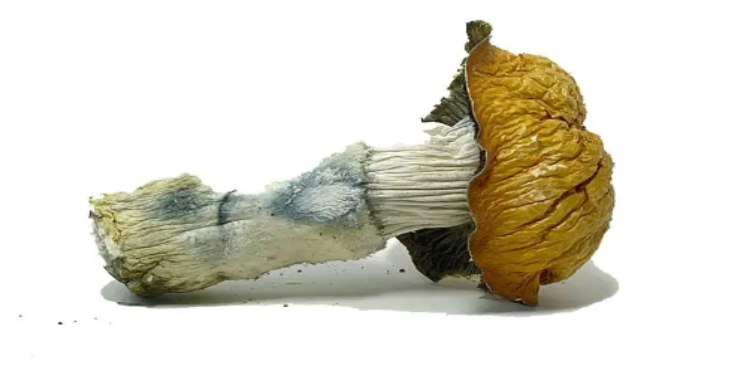
Long before magic mushrooms became a subject of online discussions, scientific research, and modern product categories, fungi had already occupied a place in human culture for centuries. Mushrooms have been used as food, represented in art, incorporated into traditional practices, and studied for their unusual biological characteristics. Psychoactive mushrooms, in particular, have a complex history that reaches across different regions and periods.
Modern interest in magic mushrooms is often discussed through the lens of contemporary psychedelic culture, but that perspective represents only one part of a much longer story. Understanding the historical relationship between humans and fungi provides useful context for understanding why these organisms continue to attract attention today.
The history of magic mushrooms also demonstrates why terminology and context matter. Traditional practices, twentieth-century scientific research, modern communities, and present-day commercial discussions each approach mushrooms from different perspectives. Looking at these developments chronologically offers a clearer picture of how perceptions have changed and why responsible information remains important.
Early Human Relationships With Fungi
Human interaction with fungi extends far beyond psychoactive mushrooms. For thousands of years, communities have encountered fungi as sources of food, materials, environmental resources, and cultural symbolism. Mushrooms can appear distinctive in natural landscapes, and their unusual shapes and sudden emergence have contributed to their presence in folklore and traditional knowledge.
The archaeological and historical record surrounding fungi is not always straightforward. Unlike stone, pottery, or other durable materials, mushrooms decompose quickly and rarely leave clear physical evidence. Researchers therefore have to combine archaeological findings, artwork, written records, ethnographic research, and other forms of evidence when examining historical relationships with fungi.
This is particularly important when considering claims about ancient mushroom use. Images or references that appear mushroom-like do not automatically prove that a particular species was used for a specific purpose. Interpretation requires consideration of the broader cultural and historical context.
Fungi have also played different roles in different societies. Some communities developed detailed knowledge of edible species, while others incorporated mushrooms into traditional stories or ceremonial practices. This diversity demonstrates that there has never been one universal human relationship with fungi.
Modern mushroom culture inherits some of this curiosity, but it exists within a very different scientific and legal environment. Contemporary readers have access to taxonomic databases, laboratory research, digital archives, and government information that earlier societies did not have. Comparing these perspectives helps separate documented history from assumptions that have developed through modern retelling.
Sacred and Ceremonial Mushroom Traditions
Some of the most widely discussed historical connections between psychoactive mushrooms come from Indigenous traditions in parts of Mesoamerica. Ethnographic and historical research has documented ceremonial relationships with certain fungi, particularly among communities in Mexico. These traditions developed within specific cultural, spiritual, and social settings and should not be reduced to modern recreational interpretations.
The importance of context cannot be overstated. A traditional ceremonial practice reflects the beliefs, customs, responsibilities, and social structures of the community in which it developed. Describing such traditions simply as an early form of modern psychedelic use can erase important cultural distinctions.
Research into these traditions became particularly influential during the twentieth century, when Western researchers began documenting Indigenous knowledge more extensively. One of the best-known figures associated with this history was R. Gordon Wasson, whose publications helped bring wider international attention to Mexican mushroom traditions during the 1950s.
However, the increased international attention also created difficult questions surrounding cultural ownership, representation, and the treatment of Indigenous knowledge. Historical accounts should therefore acknowledge both the importance of the traditions themselves and the complicated circumstances through which information about them entered Western popular culture.
The history also illustrates why modern readers should avoid treating traditional knowledge as a simple catalogue of mushroom varieties. Species identification, cultural terminology, ceremonial meaning, and modern scientific classification do not always correspond neatly.
For researchers and readers today, historical mushroom traditions are best understood within their original cultural settings. They represent living histories and complex knowledge systems rather than merely another chapter in the development of modern psychedelic culture.
Western Scientific Interest in Psychedelic Mushrooms
Western scientific interest in psychoactive mushrooms developed significantly during the twentieth century, particularly after researchers began isolating and studying the compounds responsible for their psychoactive properties. Psilocybin and psilocin became central to this scientific work, providing researchers with identifiable chemical compounds that could be investigated under controlled conditions.
The isolation of psilocybin is closely associated with the Swiss chemist Albert Hofmann, who identified the compound after examining mushrooms collected in Mexico. This development helped move discussion of psychoactive mushrooms from primarily ethnographic and cultural contexts into the fields of chemistry, pharmacology, and neuroscience.
As scientific interest grew, researchers began investigating how these compounds interact with the human nervous system. Early research examined perception, consciousness, and other aspects of the psychedelic experience. Later studies developed increasingly sophisticated research methods for examining psilocybin under controlled conditions.
For readers interested in the modern classification and presentation of mushroom varieties, the Magic Mushrooms category on Shrooms Direct provides another example of how these products and concepts are organised within a contemporary Canadian e-commerce environment. The broader website structure includes category pages, subcategories, individual product information, and educational material, reflecting how modern mushroom culture has moved into a highly digital information environment.
The scientific history is nevertheless much more complicated than a simple progression from discovery to acceptance. Research involving psychedelic substances was heavily affected by changing social and political attitudes during the second half of the twentieth century. Restrictions on controlled substances limited many forms of research and contributed to a decline in scientific activity in several areas.
This history matters because modern readers sometimes assume that current psychedelic research represents a completely new field. In reality, contemporary studies build upon earlier chemical, psychological, ethnographic, and neurological research while also using improved methodologies.
The Psychedelic Counterculture
During the 1960s and 1970s, psychedelic substances became closely associated with countercultural movements in North America and Europe. Magic mushrooms were part of a much broader cultural conversation that included LSD, alternative spirituality, experimental art, music, and challenges to conventional social norms.
This period dramatically changed the public image of psychedelic substances. Mushrooms were no longer discussed primarily through traditional practices or scientific laboratories. They became part of popular culture and were increasingly represented through music, literature, journalism, and visual art.
The association with counterculture also contributed to significant controversy. Governments introduced or strengthened restrictions on various psychedelic substances, while media coverage frequently presented the subject through highly polarised narratives. Some accounts emphasised cultural experimentation, while others focused almost exclusively on perceived social risks.
Several developments shaped the public perception of magic mushrooms during this period:
Psychedelics became part of popular culture: Music, literature, art, and youth movements helped introduce psychedelic ideas to audiences who had little connection with traditional ceremonial or scientific contexts. Mushrooms became associated with a broader cultural movement rather than being understood solely as fungi.
Government regulation changed the landscape: Increasing legal restrictions affected research, possession, and public discussion. The legal classification of psychoactive substances became an important part of their modern history.
Media coverage influenced public perception: Newspapers, television, books, and later documentaries often presented contrasting interpretations of psychedelic substances. Simplified narratives sometimes replaced more nuanced scientific or cultural explanations.
Scientific research declined in many areas: Regulatory restrictions made controlled research more difficult for extended periods. This created a historical gap between the early scientific investigations and the renewed research interest seen decades later.
The counterculture era therefore had a lasting influence on how magic mushrooms are perceived today. Many modern conversations still contain terminology and assumptions that developed during this period.
The Modern Mushroom Community
The internet has transformed the way people learn about mushrooms. Information that once required specialist books, academic publications, or local communities can now be found through websites, discussion forums, digital archives, and social media platforms.
This accessibility has created both opportunities and challenges. Online communities have helped preserve terminology, document cultivation histories, exchange observations, and introduce newcomers to mycology. At the same time, information can spread without the same editorial or scientific standards applied to academic publications.
Modern mushroom culture also contains several overlapping communities. Mycology enthusiasts may focus primarily on fungal identification and biology. Researchers may approach mushrooms through chemistry, neuroscience, ecology, or pharmacology. Others may be interested in history, culture, legislation, or contemporary product categories.
Commercial mushroom websites add another dimension. Online retailers may organise information through categories and product pages, making it easier for readers to understand different formats and types of products. However, product descriptions should still be distinguished from independent scientific evidence.
This distinction is especially important because anecdotal accounts can sound authoritative even when they represent only one person's experience. A widely repeated statement does not necessarily become scientifically established simply because it appears across multiple websites.
Modern readers therefore benefit from comparing different types of sources. Scientific publications can provide research findings, government websites can explain regulations, and specialist publications can provide historical or mycological context. Each source serves a different purpose.
The result is a mushroom culture that is more connected than ever before, but also more dependent on critical reading. Digital access has expanded knowledge while making source evaluation increasingly important.
Why Mushroom History Still Matters
The history of magic mushrooms is valuable because it shows how the same organisms can be understood very differently depending on cultural and historical circumstances. A careful reading of that history also helps prevent modern assumptions from being projected backwards onto traditional communities.
Several broader lessons emerge from the historical record:
Cultural context changes meaning: Mushrooms used within traditional ceremonies existed within specific belief systems and social structures. Understanding those practices requires attention to their original cultural setting rather than interpreting them exclusively through modern terminology.
Scientific knowledge develops gradually: Modern understanding of psilocybin and psilocin was built through decades of chemical, biological, psychological, and neurological research. Current scientific knowledge is part of an evolving process rather than a single discovery.
Legal status influences research: Changes in drug policy have affected what scientists could study and how freely information could circulate. This helps explain why historical research periods were followed by significant gaps.
Popular culture can simplify complex subjects: Music, film, journalism, and online communities have played important roles in shaping public understanding. However, cultural popularity does not necessarily provide scientific or historical accuracy.
Indigenous knowledge deserves careful treatment: Historical accounts involving traditional mushroom practices should recognise the communities that developed and maintained that knowledge. Their traditions should not be presented merely as resources for modern commercial or recreational narratives.
Modern information requires critical evaluation: Digital platforms make mushroom information widely available, but readers should distinguish academic evidence, historical documentation, personal accounts, and commercial descriptions before drawing conclusions.
These lessons make mushroom history more than an interesting timeline. They provide a framework for understanding why contemporary discussions contain such a mixture of science, culture, terminology, regulation, and personal interpretation.
Conclusion
The history of magic mushrooms stretches across traditional knowledge, cultural practices, scientific investigation, countercultural movements, and modern digital communities. Each period contributed something different to the way these fungi are understood today.
Traditional mushroom practices demonstrate the importance of cultural context, while twentieth-century scientific research established a foundation for studying compounds such as psilocybin and psilocin. The psychedelic counterculture then transformed public perceptions, followed by decades in which regulation significantly influenced research and discussion.
Today, the internet has created an unprecedented level of access to mushroom information. Readers can explore taxonomy, history, scientific research, product categories, and legal resources within minutes. That accessibility makes accurate source evaluation more important than ever.
Understanding where modern mushroom culture came from allows readers to approach the subject with greater perspective. Rather than viewing magic mushrooms through a single historical lens, a broader understanding recognises the contributions of traditional knowledge, science, culture, and modern information systems. That context provides a stronger foundation for exploring the subject responsibly and accurately.