


You scoop twice a day. You use the litter the vet recommended. You even moved the box away from the living room. And yet the moment a guest walks through the door, their face tells you the truth: the smell is still there. Odor is the most common complaint among cat owners, and it is also the most misunderstood, because most people treat it as a cleaning problem when it is usually a design and airflow problem.
Litter absorbs urine and traps ammonia, but a box that holds that ammonia against the walls, under a sealed hood, or in a stuffy corner will smell no matter how often you scoop. Fixing the smell for good means understanding where it comes from, which parts of your setup make it worse, and which changes give you the most relief for the least effort. This article works through that sequence.
Where Litter Box Odor Actually Comes From
Cat urine contains urea, which bacteria convert into ammonia within hours. That sharp, eye-watering smell is ammonia, and it builds fastest in warm, humid, poorly ventilated spaces. Feces add a second layer of odor through sulfur compounds, and both smells bind to porous surfaces: scratched plastic, unsealed seams, and the litter itself. This is why a box can smell clean right after scooping and then turn sour by evening.
The cat litter box material matters here. Deep scratches in plastic give bacteria a place to live that no scoop can reach, and once a box reaches that stage, no amount of washing removes the smell permanently. If your box has a permanent odor even when empty and scrubbed, the plastic itself has become the source.
The Role of Litter Depth and Type
Shallow litter is the quiet culprit behind most sticking and odor. When litter is only a couple of centimeters deep, urine reaches the bottom of the pan, pools there, and bonds to the plastic before it can clump. The clump then breaks apart during scooping and leaves residue behind. Keeping litter at a depth of roughly seven to ten centimeters lets urine form a solid clump that lifts out cleanly, taking the odor with it.
Litter type changes the equation too. Fine clumping clay seals urine quickly but tracks heavily and can cloud the air with dust. Crystal litters absorb and dry waste, which reduces bacterial growth, but they need more frequent full changes once saturated. Pellet litters control tracking but often let liquid drain to the bottom, so they demand a sifting design or an absorbent pad underneath. Match the litter to the box and the odor profile improves before you change anything else.
Setup Mistakes That Trap Odor
A hooded box in a closed closet is the classic odor trap. The hood keeps litter in, but it also keeps ammonia in, concentrating it until the cat breathes it every visit and the room smells every time the door opens. If you use a hood, give it ventilation and clean it more often than an open box, because the enclosed air holds odor far longer.
Placement compounds the problem. A box pressed against a wall in a humid bathroom, or tucked behind a door that stays shut, has no air exchange. Ammonia is heavier than air and settles, so a low, enclosed spot collects the worst of it. Moving the box to a spot with cross-ventilation and a little distance from walls can reduce perceived odor more than switching litter brands.
Cleaning Habits That Backfire
Over-cleaning is a real problem. Scrubbing the box with strong bleach or scented cleaners leaves residue that many cats dislike, and a cat that avoids a freshly cleaned box may eliminate elsewhere, which creates a worse smell than the one you were fighting. Mild soap and hot water are enough for routine washes. Save stronger disinfection for deep cleans, and rinse thoroughly afterward.
Under-cleaning is the opposite failure. Scooping removes solids but leaves urine-soaked litter fines at the bottom that never clump. A full litter change every two to four weeks, depending on the number of cats, clears that layer before it turns the whole box sour. If you can smell the box from across the room, you are already past the point where scooping alone will fix it.
Practical Fixes That Make a Real Difference
The fastest improvement usually comes from adding airflow and removing the seal. Take the hood off for a week and see whether the room smells better. If it does, either keep the box open or switch to a design with a vented hood and a charcoal filter that actually gets replaced. An unvented hood with a stale filter is worse than no hood at all.
Next, address the surface. Line the bottom of the box with a thin layer of baking soda before adding litter, or use a box with a smooth, non-porous interior that resists scratching. Replace any box with deep gouges, because those scratches hold bacteria permanently. A box that wipes clean in one pass is a box that stays odor-free between deep cleans.
Then fix the litter depth. Fill to the recommended depth, mark the level on the side, and top up after every scoop. Most owners let the level drop by half without noticing, and that drop is when sticking and odor begin. A simple line drawn on the outside of the box keeps the depth consistent without guesswork.
When the Box Itself Is the Problem
If you have corrected depth, placement, ventilation, and cleaning frequency and the smell persists, the box has likely reached the end of its useful life. Plastic degrades, scratches accumulate, and seams separate. At that point, replacement is cheaper than the litter and cleaners you will burn trying to compensate. Look for a box with smooth interior walls, rounded corners, and a removable hood so every surface is reachable for cleaning.
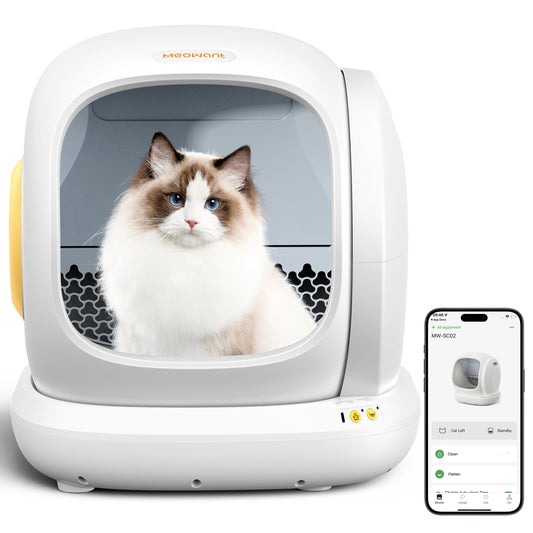
An automatic box can also help by removing waste before it has time to break down. A unit that rakes after each use keeps urine and feces out of the litter bed, which cuts ammonia production at the source. Meowant designs self-cleaning boxes with sealed waste compartments and smooth interiors, which addresses the two biggest contributors to persistent odor: waste sitting in the litter and bacteria hiding in scratches.
Odor Control Beyond the Box
The room around the box matters as much as the box itself. A small air purifier with a carbon filter near the station removes airborne ammonia that settling litter releases. An open window for ten minutes a day does more than most deodorizers, which tend to mask rather than remove. Avoid plug-in air fresheners near the box, since strong scents can drive cats away from the litter entirely.
Keep a mat under the box to catch tracked litter, and vacuum it weekly. Tracked litter carries urine residue across the floor, and that residue is often the smell you notice at nose level rather than at the box. Wash the mat with the box, not separately, so the whole station stays on the same cleaning schedule.
Finally, check the cats themselves. A sudden increase in odor can signal a urinary issue, especially in male cats. If the smell changes character or your cat urinates more often, a vet visit comes before any product change. Odor is sometimes the first sign of a health problem, and no box design fixes that.
It is also worth tracking how quickly the smell returns after a deep clean. A box that stays fresh for two weeks is behaving normally; one that turns sour within days usually has a hidden reservoir of bacteria in scratches, seams, or a hood liner that is never removed. Finding that reservoir and replacing the part often solves a problem that years of extra litter and cleaners could not.
Fresh Air Starts With a Better Setup
Litter box odor is rarely about laziness. It is about ammonia meeting a sealed space, urine reaching bare plastic, and litter that is too shallow to clump cleanly. Change those three conditions and most of the smell disappears without a single scented product.
Start with airflow by removing or venting the hood, keep litter deep enough to clump, replace scratched boxes before they become bacterial reservoirs, and match your cleaning schedule to the number of cats. If scooping is the weak point, an automatic box that clears waste after each visit removes the problem at its source. With those pieces in place, the box stops announcing itself every time someone walks past, and the room smells like a room again.