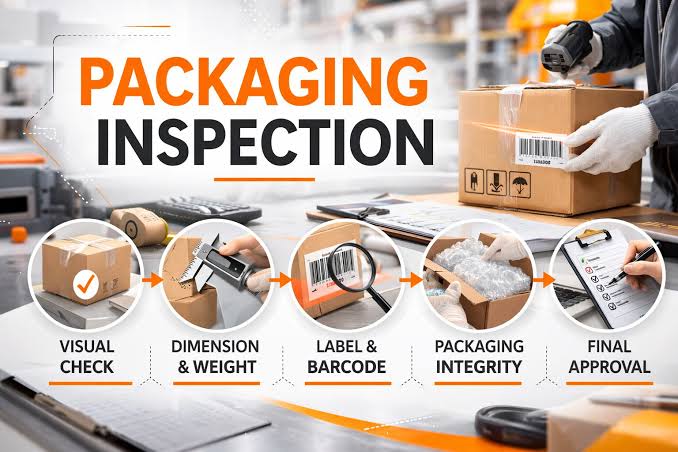
For procurement managers, operations leads, and supply chain coordinators, choosing a corrugated packaging partner is rarely a straightforward decision. The variables are numerous, the consequences of a poor choice are measurable, and the disruptions tend to surface at the worst possible moments — during a product launch, a peak shipping season, or a regulatory review. Packaging failures are not abstract. They show up as damaged goods, failed audits, delayed shipments, and strained customer relationships.
What makes this evaluation particularly complex in the current environment is that the US corrugated packaging sector has diversified significantly. There are large volume manufacturers, regional specialists, and hybrid operations that combine structural design with fulfillment support. Understanding which type of provider aligns with your operational needs requires a structured approach, not a general vendor comparison. This checklist is designed to help you build that structure — covering the criteria that actually matter when long-term reliability is the goal.
Understanding What Corrugated Packaging Manufacturing Services Actually Include
When evaluating a provider, many buyers focus narrowly on price per unit or lead time. Those factors matter, but they often mask deeper differences in capability, process control, and service scope. corrugated packaging manufacturing services cover a wide range of functions — from the conversion of raw fiberboard into finished containers to the printing, testing, and documentation that supports commercial and industrial use. Providers differ substantially in which parts of this chain they own internally versus subcontract out, and that distinction has a direct impact on consistency and accountability.
Some providers offer full in-house production, including die cutting, printing, scoring, folding, and quality inspection. Others operate as brokers or hybrid coordinators who manage production across multiple plants. Understanding where the actual manufacturing happens, and who controls quality at each stage, is one of the most important pieces of information a buyer can gather before signing a contract.
It is also worth recognizing that the documentation and compliance infrastructure surrounding packaging production is just as important as the physical product. Instruction sheets, material certifications, and packaging specifications need to be accurate, accessible, and consistent across orders. Providers that manage this documentation internally — rather than assembling it manually per order — tend to deliver more reliable results over time.
The Role of Documentation in Long-Term Supplier Relationships
Documentation is one of the most overlooked dimensions of packaging evaluation, and it is often where problems compound over time. When a packaging provider cannot produce consistent material certifications, or when instruction sheets differ between production runs without explanation, it creates downstream complications for the buyer — particularly in regulated industries like food and beverage, medical devices, and chemicals.
A well-organized manufacturer will have a structured approach to producing and storing packaging documentation. This includes standardized instruction sheets, material data records, and version-controlled specifications that can be retrieved and audited on demand. The absence of this infrastructure does not always reveal itself immediately, but it tends to create friction during supplier audits, product recalls, or customer-facing compliance reviews.
Production Capacity and Order Consistency
Production capacity is not simply a measure of volume. It reflects how a manufacturer responds to demand variability, how they schedule runs for mid-size accounts, and whether their equipment and staffing can sustain consistent output across different order sizes. A manufacturer that performs well on large runs but struggles with shorter runs — or vice versa — may not be the right fit depending on your procurement model.
Consistency across orders is a separate issue from capacity. Some manufacturers invest in process standardization and quality checkpoints that ensure a box produced in March looks and performs the same as one produced in October. Others operate with more variability, which tends to be acceptable in lower-stakes applications but becomes a liability when packaging is subject to weight thresholds, stacking tests, or brand standards.
How Equipment Age and Maintenance Schedules Affect Output
Equipment condition is a legitimate factor in evaluating production reliability. Aging corrugators and converting lines that are not maintained on a structured schedule introduce variability into flute consistency, board caliper, and crush resistance. These variations may be small on any given unit, but when multiplied across thousands of boxes, they affect how product performs during transit and storage.
Buyers rarely have direct visibility into a manufacturer's maintenance practices, but there are indirect indicators. Lead time reliability, defect rates, and the frequency of production reruns are all signals of underlying equipment and process health. Requesting production performance data — rather than just capacity claims — is a reasonable step during evaluation.
Regional Sourcing and Material Supply Stability
Where a manufacturer sources its raw fiberboard has practical implications for your supply chain. A provider that relies on a single mill or a narrow network of suppliers introduces concentration risk. When that mill experiences disruption — whether from weather events, labor issues, or logistics constraints — it affects every customer on that supply line.
Manufacturers with diversified sourcing relationships, or those located in regions with strong access to multiple containerboard suppliers, tend to offer more stable lead times and pricing. According to the ISO standards framework for packaging material testing, material traceability and consistency are foundational requirements for commercial packaging supply chains — underscoring the importance of knowing exactly where and how input materials are sourced.
Quality Control Systems and Defect Management
Quality control in corrugated packaging manufacturing is not a single inspection point at the end of a production run. Reliable manufacturers build quality checkpoints into the process — at material intake, during conversion, and before finished goods leave the facility. Each checkpoint serves a different purpose, and together they reduce the likelihood of defective product reaching the customer.
When evaluating a provider, the relevant questions are not just whether they have a quality program, but how defects are tracked, how root causes are identified, and what happens when a production run falls outside acceptable parameters. Providers with mature quality systems can answer these questions with specific processes and data. Those without them tend to offer general reassurances.
Tolerance Management and Structural Integrity Testing
Structural integrity in corrugated packaging depends on how well the finished box performs under the specific conditions of your supply chain — stacking loads, humidity exposure, transit vibration, and handling at multiple points. Manufacturers that conduct edge crush tests, burst tests, and flat crush tests as routine quality measures are better positioned to catch problems before product ships.
Tolerance management refers to how tightly a manufacturer controls dimensional accuracy across a production run. Even small deviations in box depth or flap overlap can affect machine line compatibility for customers who are auto-erecting boxes. Understanding a manufacturer's tolerance standards and testing protocols should be a required part of any qualification conversation.
Communication Infrastructure and Account Support
The operational relationship between a buyer and a packaging manufacturer involves ongoing communication — about order status, design revisions, material changes, and compliance documentation. How a manufacturer structures that communication, and who owns the relationship on their side, affects how smoothly these interactions unfold over time.
Manufacturers with dedicated account management — where one person or a small team is responsible for a specific set of accounts — tend to resolve issues faster and more accurately than those using a shared customer service pool. This matters most when urgency is real: when a production line is waiting on packaging, or when a shipment needs documentation before a customs clearance deadline.
Responsiveness During Disruption
Supply chain disruptions are not rare events. They are recurring features of industrial procurement, and the question is not whether they will happen but how a manufacturer responds when they do. A provider's behavior during a disruption — how quickly they communicate, how clearly they explain constraints, and what alternatives they offer — reveals more about the relationship than any normal order cycle.
Before committing to a long-term agreement, it is worth asking a prospective manufacturer about a recent supply disruption they experienced, and how they managed it. The specificity and honesty of the response is informative in itself.
Compliance, Certifications, and Industry-Specific Requirements
Different industries have different packaging requirements, and manufacturers vary in their familiarity with those requirements. Food-contact packaging, for example, involves material restrictions and traceability obligations that do not apply to industrial applications. Pharmaceutical and medical packaging may require cleanroom-adjacent handling or specific adhesive formulations. Hazardous materials packaging is governed by Department of Transportation classifications that affect box construction and testing protocols.
A manufacturer that serves multiple industries is not automatically better positioned for your specific needs. What matters is whether they have documented experience with the compliance requirements of your sector, and whether their internal systems support the documentation you need to stay compliant on your end. Certifications such as FSC chain-of-custody or SFI program credentials may also be relevant if your organization has sustainability reporting obligations.
Evaluating Certifications Beyond the Certificate
Certifications are a useful starting point, but they require context to be meaningful. A manufacturer can hold an ISO or industry-specific certification without having a well-functioning quality system beneath it. The certification reflects a point-in-time audit, not a continuous state of operational excellence. Buyers who look at how a manufacturer uses its certification — whether it drives process decisions or simply satisfies a procurement checkbox — get a more accurate picture of operational maturity.
Conclusion
Evaluating a corrugated packaging manufacturer is a process of eliminating uncertainty. The goal is not to find the cheapest option or the largest facility — it is to identify a provider whose capabilities, processes, and communication practices align with the actual demands of your operation. That alignment is what produces consistent, reliable results over time, and it is what protects your supply chain when conditions change.
The checklist approach outlined here is intended to shift the evaluation from a price-focused comparison to a capability-focused assessment. Documentation infrastructure, production consistency, quality control depth, account communication, and compliance readiness are the factors that determine whether a packaging relationship is stable or fragile. Taking the time to evaluate each of these areas before committing to a supplier is not due diligence in the bureaucratic sense — it is practical risk management that pays returns throughout the life of the contract.
For organizations that are reassessing their current supplier relationships or beginning a new selection process, the structure of this evaluation should remain consistent regardless of the manufacturer's size or region. The right questions are the same whether you are working with a national provider or a regional operation. What changes is how each manufacturer answers them — and that difference is where the evaluation actually happens.