

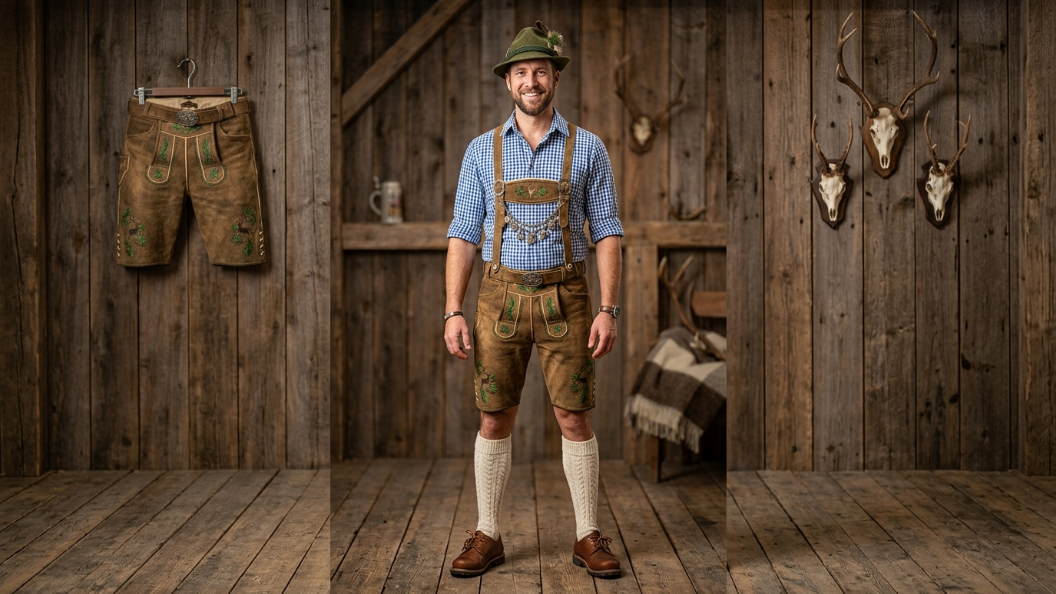
For men planning Oktoberfest attendance in 2026, understanding complete oktoberfest outfits for men requires more than just choosing lederhosen. Complete outfit assembly involves coordinated selection across multiple pieces working together as unified traditional Bavarian ensemble — quality lederhosen foundation, appropriate coordinating shirt, quality wool socks matching the trouser length and season, sturdy leather Haferl shoes anchoring the ensemble visually, proper Bavarian hat completing the traditional character, complete accessorization including Charivari chain and leather belt, and thoughtful coordination across all elements creating finished ensemble character rather than randomly assembled costume pieces.
The distinction between complete coordinated outfit and partial ensemble matters significantly for both photograph quality and how experienced Bavarian heritage community members respond to your appearance. Quality lederhose paired with random accessory choices photographs as incomplete and reads as costume-focused rather than heritage-appropriate. Complete outfit assembly with coordinated pieces working together creates ensembles that photograph beautifully and signal genuine engagement with Bavarian tradition. Understanding what makes an Oktoberfest outfit for men complete rather than partial helps ensure your festival attendance delivers the results you're expecting.
The Foundational Piece: Lederhose Selection
Every complete Oktoberfest outfit builds around the lederhose foundation. Length selection between kurze (short, mid-thigh), kniebund (knee-length), and lange (ankle-length) affects both visual character and appropriate occasion contexts. Kurze represents the standard Oktoberfest choice worn by the vast majority of attendees, providing classic Bavarian silhouette and comfortable warm-weather wear. Most first-time buyers choose kurze based on the standard festival aesthetic.
Kniebund suits cool-weather Oktoberfest attendance and wearers preferring more coverage than summer kurze provides. The knee-length pairs with quality wool knee socks creating classic traditional silhouette suited to autumn festival attendance. Lange serves winter contexts and specific formal traditional occasions, providing full-length coverage suited to cold-weather Bavarian events beyond typical Oktoberfest focus.
Color selection centers on medium brown as safest first purchase, working across every combination of coordinating shirt and accessory options while photographing as classic Oktoberfest imagery. Darker chocolate brown appears in premium pieces and coordinates naturally with warmer autumn colors. Black lederhose exists but appears less commonly at Oktoberfest than in more formal Trachten contexts.
Shirts and Coordination Impact
The Trachtenhemd worn beneath or coordinating with the lederhose significantly affects the finished outfit character. Classic white cotton delivers the most formal and traditional visual, photographing as elevated Trachten configuration suitable for both festival attendance and more formal Bavarian contexts. Quality white Trachtenhemd features specific collar construction with often visible embroidered details and cotton weight providing comfortable long-day wear.
Checkered patterns provide the most common festival-focused choice, with blue-and-white and red-and-white being most traditional. The checked pattern reads as more casual and festival-appropriate than solid white, and hides food and beverage staining better across long festival days. Blue-and-white checks work universally; red-and-white adds warmer festive character particularly suited to autumn Oktoberfest atmosphere.
The shirt tucks into the lederhose for the proper traditional silhouette. Untucked configurations break the visual coherence and read as costume-focused rather than authentic. This detail seems minor but photographs immediately as distinguishing complete Bavarian outfits from partial approximations. Learning to tuck properly and keep the shirt in position across full festival days becomes part of the practical wearing experience.
Understanding Lederhose Broader Context
Understanding lederhose as broader traditional Bavarian trouser tradition helps position specific selection within centuries-long heritage context. The lederhose developed from Alpine rural workwear, evolving from practical peasant trousers into recognized traditional cultural expression across specific Bavarian and Alpine regions. Contemporary lederhose construction preserves this heritage while making pieces accessible for international engagement.
Regional variations across Bavaria and neighboring Alpine areas each developed distinct traditions. Miesbacher Tracht features distinctive dark leather with rich embroidery. Tegernseer Tracht carries distinct regional character. Werdenfelser Tracht incorporates specific Alpine mountain culture. Each regional variation carries authentic heritage that buyers with specific family regional connections can honor through appropriate selection.
The lederhose tradition extends beyond just the trousers themselves. Complete traditional Bavarian ensemble development incorporates coordinated pieces working together as unified Trachten configuration. Understanding this broader ensemble context helps position specific piece selection within complete outfit development rather than treating lederhose as isolated garment.
Footwear and Sock Coordination
Traditional Bavarian footwear centers on quality Haferl shoes with distinctive side-lacing, substantial leather construction, sturdy soles for outdoor terrain, and specific styling elements distinguishing them from standard shoes. Quality Haferl reads as immediately Bavarian to anyone familiar with the tradition and photographs as the finishing detail anchoring complete outfits.
For men wearing kurze lederhose, quality wool knee socks reaching just below the knee create classic traditional silhouette. Cream, brown, or gray socks in wool provide traditional character. The visible sock area between the shorts and shoes creates the distinctive traditional look. Standard cotton athletic socks or low-cut socks break this visual coherence entirely.
For kniebund lederhose, wool knee-high socks reaching just below the trouser hem maintain proper silhouette. The lower visible portion of leg between shorts and socks characteristic of kurze configurations doesn't apply. For lange lederhose, socks are largely covered by the trouser leg; standard wool socks work while being less visually prominent.
Sock color coordination should match the overall ensemble color story. Cream or off-white socks work universally. Brown socks coordinate with brown lederhose configurations. Gray socks work with more neutral ensemble development. Traditional patterned socks reflecting specific regional heritage add authentic character for buyers with particular ancestral connections.
Hats and Complete Ensemble Coordination
The Bavarian hat completes the ensemble visually and anchors traditional character across the outfit. Green Tyrolean hats work universally with brown lederhose configurations, making them the safest first-purchase choice. The classic pointed or slightly rounded crown with narrow brim delivers immediately recognizable Bavarian character.
Alternative hat styles including Alpine hats, festival-specific variations, and regional style pieces provide options for wearers wanting variety beyond mainstream Tyrolean choice. Different specific styles suit different contexts, though Tyrolean works universally and represents safest choice for first-time buyers or wearers preferring universal appropriateness.
Hat sizing matters for practical festival wear. A hat too small won't sit properly; too large will slip during energetic movement. Careful measurement of head circumference just above eyebrows and ears provides accurate sizing. Quality retailers convert between European centimeter measurements and American inch measurements.
Feathers, pins, and specific decorative elements add personalization while the base hat provides foundational visual. Adding pins from festivals attended across successive years creates meaningful personal record while maintaining traditional character.
Charivari and Accessorization
The Charivari decorative chain worn across the front bib of the lederhose provides personalization and complete traditional aesthetic. Charivari selections range from simple decorative pieces suitable for first-time wearers through elaborate multi-generational family heirloom versions with attached charms representing family history, regional heritage, and specific events. Adding pieces to a family Charivari across generations creates meaningful heritage tradition.
Quality leather belt worn over the lederhose (not through belt loops as with modern trousers) provides another traditional element that many first-time buyers overlook. The belt sits over the top of the lederhose at the waist connection point, adding both practical function and traditional visual character. Standard belts through belt loops break traditional configuration.
Additional smaller accessories including traditional watches on chains, decorative pins accumulated from festivals attended, small decorative knives (Fischermesser) worn traditionally in specific pocket positions, and Bavarian-style handkerchiefs collectively add authentic finishing character. First-time buyers can add these gradually across successive Oktoberfests rather than requiring complete accessorization at initial purchase.
Practical Considerations for Festival Success
Complete Oktoberfest outfit assembly should support practical festival attendance across full 8-hour-plus days rather than being purely photograph-focused. Comfortable footwear matters significantly given substantial walking around fairgrounds, extended standing during socializing, and general activity across festival days. Breaking in Haferl shoes across several shorter wearings before festival prevents blister issues.
Temperature management across the day matters for Bavarian autumn weather ranging from warm afternoon sunshine to cooler evenings. Layering options including possible outer wear for cooler periods, appropriate wool socks providing warmth, and Trachtenhemd weight suited to expected conditions all support comfortable full-day attendance. Some attendees carry a light Janker or wool jacket for evening cooling.
The Charivari and other accessories should be secured properly to prevent loss during energetic movement. Losing significant Charivari elements during dancing or falling asleep on beer tent tables happens commonly, and either securing accessories carefully or leaving irreplaceable pieces at home protects against loss.
Where Complete Outfits Belong
Beyond Munich Oktoberfest itself, complete quality Oktoberfest outfits work across substantial calendar of events for committed heritage wearers. Regional Oktoberfest celebrations in cities including Cincinnati, Frankenmuth, Denver, LaCrosse, Helen, Mount Angel, and dozens of others across the United States and internationally provide multiple annual attendance opportunities.
Beyond September-October primary Oktoberfest season, complete Bavarian outfits work at Christmas markets, Fasching celebrations, German-American cultural festivals throughout the year, family Bavarian heritage gatherings, weddings incorporating German or Bavarian traditions, beer garden dining at authentic Bavarian restaurants, and various themed occasions where quality authentic construction reads as appropriate heritage engagement.
.png)