

For years, enterprises paid for rows of physical phone lines they never fully used, locked into rigid contracts and expensive long-distance charges. SIP trunking changed that equation. By carrying voice calls over an internet connection instead of copper wires, it lets large organizations scale communications up or down with a few clicks.
If your business still runs on traditional PRI lines, or you’re evaluating a move to the cloud, understanding SIP trunking is essential. This guide walks through what it is, how it works, what it costs, and how to migrate safely, written for decision-makers who want clarity without the jargon.
Table of Contents
What Is SIP Trunking?
How SIP Trunking Works
SIP Trunking vs. Traditional PRI Lines
Key Benefits for Enterprises
Understanding SIP Trunking Costs
Security and Reliability Considerations
How to Migrate to SIP Trunking
Frequently Asked Questions
Key Takeaways
Conclusion
What Is SIP Trunking?
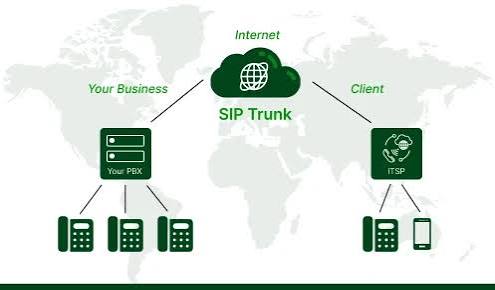
SIP stands for Session Initiation Protocol, the technology that sets up, manages, and ends voice and video calls over the internet. A “trunk” is simply a line that carries calls. Put them together, and a SIP trunk is a virtual connection that links your phone system to the public telephone network through your internet connection.
Instead of leasing physical lines from a telecom carrier, you buy channels, or concurrent call paths, from a SIP provider. Each channel handles one simultaneous call, and you can add or remove them as your needs change.
For enterprises running an existing IP-based phone system or Cloud PBX, SIP trunking is often the most cost-effective way to connect to the outside world.
How SIP Trunking Works
At a high level, the process is straightforward. When an employee makes a call, their phone system converts the voice into data packets. Those packets travel over the SIP trunk to the provider, which routes them to the recipient, whether that person is on a mobile network, a landline, or another VoIP system. The reverse happens for inbound calls, and everything rides on your data connection, so there’s no need for separate voice circuits.
Three components make this work together:
The IP-PBX or communications platform that manages calls internally.
The SIP trunk that connects that platform to the outside world.
The internet or dedicated data link that carries the traffic.
Because it’s all software-defined, changes that once required a technician and weeks of lead time now happen in minutes.
SIP Trunking vs. Traditional PRI Lines
Many enterprises are weighing SIP against legacy PRI (Primary Rate Interface) service. The differences are significant.
PRI still has a place in some environments, but for most growing enterprises the flexibility and cost profile of SIP make it the clear direction of travel.
Key Benefits for Enterprises
Lower Communication Costs
SIP trunking typically eliminates the premium charges tied to traditional lines. Industry surveys report that organizations moving from PRI to SIP often see meaningful reductions in their monthly telecom spend, particularly on long-distance and international calling.
Scalability on Demand
Seasonal call spikes, new office openings, or sudden growth no longer require infrastructure projects. You simply provision more channels. When demand drops, you scale back and stop paying for idle capacity.
Business Continuity
If an office loses power or connectivity, calls can automatically reroute to another location, mobile devices, or backup numbers. This kind of resilience is difficult and expensive to achieve with physical lines.
Unified, Location-Independent Numbers
SIP lets you assign local phone numbers from cities or countries where you have no physical presence, which is a powerful advantage for enterprises serving distributed markets. It also pairs naturally with a broader VoIP Phone System that unifies voice, video, and messaging.
Understanding SIP Trunking Costs
Pricing models vary, so it pays to understand the common structures before you compare providers:
Per-channel pricing: You pay a flat monthly fee for each concurrent call path. Predictable and easy to budget.
Per-minute (metered) pricing: You pay for actual usage, which suits organizations with lower or unpredictable call volumes.
Unlimited or bundled plans: A fixed rate covers a set of channels and calling minutes, often the best fit for high-volume enterprises.
Beyond the headline rate, factor in number porting fees, any hardware upgrades, and the cost of ensuring your internet connection has enough bandwidth and quality of service (QoS) to handle voice reliably. A useful rule of thumb: estimate your peak concurrent calls, not your total headcount, since not everyone is on the phone at once.
Security and Reliability Considerations
Moving voice onto your data network introduces new security responsibilities. Reputable providers address these, but enterprises should verify a few essentials:
Encryption: Look for support for TLS and SRTP to protect call signaling and media.
Fraud protection: Toll fraud can generate huge bills quickly. Good providers offer call limits, geographic blocking, and anomaly alerts.
Session Border Controllers (SBCs): These act as security gateways between your network and the provider, filtering threats and managing traffic.
Redundancy: Multiple data centers and failover routing keep calls flowing if one path goes down.
Reliability also depends on your own network. Prioritizing voice traffic with QoS settings and maintaining sufficient bandwidth prevents the jitter and dropped calls that give VoIP a bad reputation when it’s poorly configured.
How to Migrate to SIP Trunking
A smooth migration follows a clear sequence rather than a rushed cutover:
Assess your current setup. Document existing lines, call volumes, and peak usage.
Audit your network. Confirm bandwidth, latency, and QoS can support voice quality.
Choose a provider. Compare pricing, security features, support, and integration with your existing platform.
Plan number porting. Coordinate the transfer of existing numbers to avoid downtime.
Run a pilot. Test with a single department before rolling out enterprise-wide.
Train and monitor. Educate teams, then track call quality metrics after launch and tune as needed.
Partnering with an experienced provider makes each step easier. A modern SIP Trunking service can handle porting, configuration, and monitoring so your team isn’t left troubleshooting alone.
Frequently Asked Questions
Is SIP trunking the same as VoIP?
Not exactly. VoIP is the broad category of making calls over the internet. SIP trunking is a specific method of connecting an existing phone system to the telephone network using the SIP protocol.
How many SIP channels does my enterprise need?
Base it on peak concurrent calls, not total employees. A common estimate is one channel for every three to five employees, though call-heavy teams need more.
Will SIP trunking work with my existing phone system?
If your system is IP-enabled, usually yes. Older analog systems may need a gateway device or an upgrade to connect properly.
Can I keep my current phone numbers?
Yes. Number porting lets you transfer existing numbers to your new SIP provider, typically with minimal disruption when planned properly.
How reliable is SIP trunking compared to traditional lines?
With adequate bandwidth, QoS, and provider redundancy, SIP can match or exceed traditional reliability, and it offers superior disaster recovery through automatic rerouting.
Is SIP trunking secure enough for enterprise use?
When encryption, session border controllers, and fraud monitoring are in place, SIP trunking meets enterprise security standards. Choosing a provider with strong protections is key.
Key Takeaways
SIP trunking connects your phone system to the telephone network over the internet.
Keep reading
More posts from our blog
 A Complete Guide to Getting Started With Poker88By AmirUIT September 21, 2026Online gaming platforms have become an accessible form of digital entertainment for people who enjoy exploring different games and interactive...Read moreStreamlining Interoffice Document Flow for Faster ApprovalsBy AmirUIT September 21, 2026Organizations that want faster approvals must rethink how documents move between departments. Delays often stem from unclear ownership, inconsistent...Read more
 Lembagatoto: Discovering the Features of an Online Gaming PlatformBy AmirUIT September 21, 2026The internet has created an entirely new environment for entertainment, allowing people to discover gaming experiences through computers and mobile...Read more