

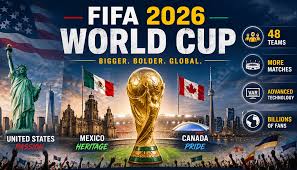
The global sporting landscape is defined by few events with the magnitude, cultural resonance, and sheer spectacle of the FIFA worldcup. Every four years, the planet pauses to watch the greatest athletes compete for the most prestigious trophy in football. However, as we look toward the horizon, all eyes are fixed on 2026. Hosted jointly by Canada, Mexico, and the United States, the upcoming tournament is poised to redefine the limits of sports entertainment. With an expanded format, historic host cities, and a massive surge in global interest, the 2026 worldcup is not just another tournament—it is set to be the biggest and most influential edition in the history of the sport.
A Massive Expansion: More Teams, More Drama
The most significant change arriving in 2026 is the expansion of the tournament format. For decades, the worldcup operated with 32 teams. In 2026, that number will jump to 48 nations. This decision by FIFA is designed to provide greater inclusivity and global representation, allowing countries that have historically struggled to qualify a chance to compete on the world stage.
This shift does more than just add games to the calendar; it fundamentally alters the tournament’s intensity. More teams mean more group-stage matches and an expanded knockout bracket. For fans, this translates into a constant stream of high-stakes football. The sheer volume of matches ensures that the tournament will dominate the global news cycle for weeks, effectively turning the entire month into a festival of international sport.
A Tri-Nation Hosting Model: Unprecedented Scale
For the first time in history, the Fun88 will be hosted across three different countries. This logistical feat is unprecedented, stretching from the iconic stadiums of Mexico City to the state-of-the-art arenas in the United States and the vibrant, modern venues in Canada.
By leveraging the infrastructure of three major nations, FIFA is creating a tournament that is geographically and culturally diverse. Some of the benefits of this tri-nation approach include:
Diverse Fan Experiences: Fans will have the opportunity to experience three distinct cultures, all united by their passion for football.
Infrastructure Efficiency: Utilizing existing world-class stadiums in major North American cities reduces the need for the massive "white elephant" construction projects that have plagued previous host nations.
Massive Capacity: With the US hosting the majority of games, the tournament will utilize some of the largest stadiums in the world, many of which hold upwards of 80,000 spectators, ensuring record-breaking attendance numbers.
For more information on the official host cities and developments, you can visit the official FIFA website.
The North American Football Revolution
The 2026 worldcup arrives at a critical juncture for the sport in North America. In the United States, Major League Soccer (MLS) is seeing its highest levels of popularity ever, bolstered by massive investments and the arrival of global superstars. Mexico remains a football-obsessed nation where the sport is woven into the cultural fabric, and Canada has seen a remarkable resurgence in its national team’s performance and public interest.
This tournament will serve as a catalyst for growth. The exposure provided by hosting the world’s biggest sporting event will likely inspire a new generation of players, coaches, and fans. By the time the final whistle blows in 2026, the footballing landscape in these three countries will have been permanently transformed, leaving behind a legacy that will benefit the sport for decades.
Economic and Cultural Impact
Beyond the pitch, the 2026 worldcup is expected to generate record-breaking economic activity. Tourism, hospitality, and broadcasting sectors are bracing for an unprecedented influx of demand. Global viewership is projected to shatter previous records, as the time zones across North America make the games accessible to a massive portion of the world's population.
Culturally, the tournament will act as a bridge, bringing together millions of people from different backgrounds. The worldcup has always been a unique platform for diplomacy and unity, and the North American edition will be no exception. It will showcase the diversity of the host nations while highlighting the universal language of football.
Conclusion
The 2026 worldcup is shaping up to be a watershed moment for the beautiful game. By expanding the field to 48 teams, utilizing the vast infrastructure of three host nations, and capitalizing on the growing popularity of football in North America, FIFA has set the stage for an event that will dwarf all its predecessors.
Whether you are a casual fan or a dedicated follower of the sport, the upcoming tournament promises to deliver drama, excitement, and a level of scale that has never been seen before. As we count down the days, it becomes increasingly clear that 2026 will not just be a tournament—it will be a historic celebration of global unity and athletic excellence. The stage is set, the world is watching, and the biggest worldcup in history is ready to take center stage.
.png)
.png)