

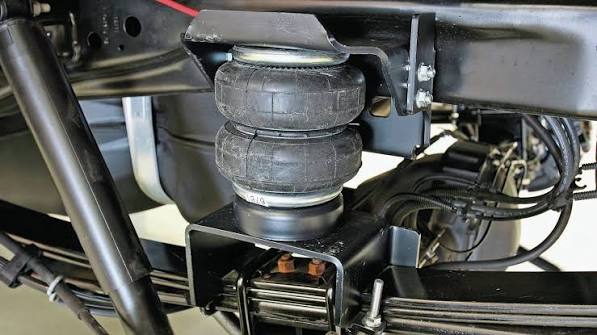
what is air ride suspension? It is a suspension system that uses pressurized air springs, often called air bags or bellows, to support a vehicle and manage ride height or loaded stance. For pickup owners, the term may refer to factory air suspension, aftermarket air helper springs that supplement the original suspension, or the compressor and controls used with those helper springs.
The distinction matters. A factory-style system can use air springs as a primary springing element. Most aftermarket pickup kits instead add adjustable rear support while the truck's leaf springs or coils remain the primary suspension. They may help level a properly loaded truck, but they do not change manufacturer ratings.
Retrue offers vehicle-specific RideHelper™ air suspension kits for pickup applications. Before ordering, confirm fitment for the truck's year, make, model, drivetrain, bed configuration, suspension, and factory options.
How air suspension works on a pickup
Air springs are reinforced rubber components mounted between the axle and frame or suspension brackets. Adding compressed air increases their supporting force; releasing air reduces it. A full air-suspension system may use height-control valves or electronic sensors to add or exhaust air as the load changes.
Common components include:
Air springs and vehicle-specific brackets
Air lines, fittings, and inflation valves
An optional onboard compressor
Optional gauges, switches, wireless controls, or height sensors
For a pickup with changing loads, adjustability is the main benefit. With no load, a helper-bag system should generally remain at the kit maker's specified minimum pressure. With bed cargo or trailer tongue weight, pressure may be increased within the kit instructions to help return the truck toward its intended stance.
Air pressure is not a substitute for proper loading, tire condition, trailer setup, braking capability, or suitable hitch equipment. It also cannot correct a truck that is overloaded or has worn suspension components.
Factory systems, helper bags, and conversions
Factory air suspension
Factory air suspension is engineered as part of the vehicle. Depending on the truck, it may include sensors, a compressor, reservoir, valves, electronic controls, and diagnostic functions. Air springs may handle some or all of the springing role normally provided by steel coils or leaf springs.
Follow the exact owner's manual and service information for operation, faults, service, and modifications. Do not assume an aftermarket helper-bag kit will work with factory air suspension; its fitment must specifically account for that equipment.
Aftermarket air helper springs
For many pickups, “air ride” means rear air helper springs. These bags supplement the existing rear suspension rather than replace it. They are commonly used to reduce rear-end squat from a properly rated bed load or trailer tongue weight.
Air helper springs do not increase vehicle or component weight ratings. They do not raise GVWR, GAWR, payload, tire capacity, hitch capacity, or towing rating. The truck's brakes, axles, bearings, frame, tires, hitch, and other components still set its capability.
Follow the vehicle, trailer, hitch, and air-spring instructions, along with all posted ratings. If the loading situation or equipment combination is unclear, get qualified guidance before towing.
Full air ride conversions
A full conversion replaces or substantially redesigns the original springing arrangement. It can involve air springs, links or beams, shocks, leveling valves, controls, and fabrication. This is more complex than adding helper bags and can affect suspension geometry, wheel travel, alignment, clearance, and serviceability.
A conversion is not a fix for overloading, poor load balance, worn parts, or improper hitch setup. Seek professional suspension guidance before altering a truck's primary suspension architecture.
Choosing manual or onboard controls
Helper bags can use manual fill valves. This simple arrangement can suit owners who tow or haul only occasionally and carry similar loads. An onboard compressor adds the ability to adjust pressure from the cab or remotely, depending on the system.
Some systems use a single air path, which supplies both bags at the same pressure. Dual-path systems allow separate left and right adjustments. Separate control can help with a genuinely uneven load, but it should not be used to hide unsafe cargo placement. Reposition and secure the load first whenever possible.
A level-looking truck is not automatically within its axle, tire, hitch, or trailer limits. Confirm the numbers, not just the stance.
Air bags and towing: what they can and cannot solve
Properly selected helper bags may help restore rear support when a rated load compresses the back of the truck. A more level stance can help preserve intended headlight aim and provide a more consistent starting point for towing setup.
Load leveling is only one part of towing. A weight-distribution hitch manages trailer tongue-weight transfer among the tow vehicle's axles and the trailer axles. Helper springs manage rear suspension support. The two may be used together when the applicable vehicle, hitch, trailer, and air-spring instructions permit it.
Use the setup sequence specified by those instructions. If the documents conflict or the trailer behaves unpredictably, stop and seek qualified help rather than adding more air pressure.
Cargo security is separate from suspension support. Tie down cargo with appropriate straps, rope, or netting; secure large objects directly to the vehicle or trailer; and check the load before travel. Air bags cannot prevent loose cargo from shifting, escaping, or changing tongue weight.
Selecting an air ride suspension kit
The best kit is not simply the one with the largest advertised support figure. It is the one confirmed for the exact truck, intended load, and installation conditions.
Verify fitment
Check the year, make, model, drive configuration, bed length, suspension layout, and factory options. Also account for aftermarket lifts, lowering components, auxiliary fuel tanks, hitch hardware, and prior suspension modifications that could affect clearance.
Use a category page only as a starting point. Confirm the individual product's current fitment notes and installation manual before purchase.
Review the instructions before ordering
Verify kit contents, compatibility notes, minimum and maximum operating pressure, warranty and return terms, and exclusions. If a shop will install the kit, provide the documentation before scheduling the work.
During installation, follow the kit instructions exactly. Confirm brackets are correctly located and tightened as specified, air lines are protected from heat and abrasion, and the bags do not rub or overextend through the relevant suspension travel.
Safe use and maintenance checklist
Before towing or hauling, use this checklist:
Confirm the load, vehicle, axle, tire, hitch, and trailer ratings are not exceeded.
Secure cargo and verify trailer coupling, safety chains, electrical connections, and other required equipment.
Inflate tires as specified for the actual load and inspect their condition.
Set air-spring pressure only within the kit's stated operating range.
Check that bags, lines, fittings, and brackets have no leaks, damage, looseness, rubbing, or heat contact.
Reinspect the system after initial use and periodically thereafter.
Leaks can come from damaged air lines, loose fittings, valves, or the air springs themselves. Moisture can also interfere with air-system components, especially in cold conditions. Follow the kit maker's troubleshooting process rather than guessing at a repair.
If the truck still sags severely, wanders, brakes poorly, or shows unusual tire wear after a reasonable adjustment within the instructions, do not keep increasing pressure. Recheck load placement, tongue weight, hitch setup, suspension condition, and ratings. A qualified technician or towing professional can help identify the cause.
Frequently asked questions
Do air helper bags increase a pickup's payload or towing capacity?
No. They can assist rear load leveling, but they do not increase GVWR, GAWR, payload, tire capacity, hitch capacity, or towing rating.
Do I need an onboard compressor?
Not necessarily. Manual inflation valves may be sufficient for occasional use. An onboard compressor mainly adds convenience when loads or pressure needs change often.
Can helper bags replace a weight-distribution hitch?
No. Helper bags support the rear suspension, while a weight-distribution hitch manages trailer tongue-weight transfer and helps with trailer setup. Use the equipment required or recommended for the vehicle, hitch, and trailer.
What should I inspect if the system loses pressure?
Inspect the air springs, lines, fittings, and valves, then follow the kit maker's troubleshooting process. Look for leaks, abrasion, loose connections, heat damage, and moisture-related issues.