

A Practical Guide for Teams Outgrowing New Relic
This guide evaluates seven alternatives through a Kubernetes and cloud-native lens: CubeAPM, Datadog, Dynatrace, Grafana Cloud, IBM Instana, Elastic APM, and Honeycomb. Each tool is assessed on pod-level monitoring, container observability, service mesh support, dynamic infrastructure handling, and what it actually costs when your cluster scales.
*Estimates based on 30TB/month ingestion, 100 hosts, 20 users, 30-day retention. Full methodology at end of article.*
Kubernetes Capabilities at a Glance
Before diving into individual tools, here is how each platform handles the Kubernetes-specific requirements that matter most to cloud-native teams:
* Kubernetes monitoring complexity grows with cluster size. Ephemeral pods, auto-scaling, and service mesh sidecars multiply both telemetry volume and the billing dimensions most vendors charge on.
1. CubeAPM
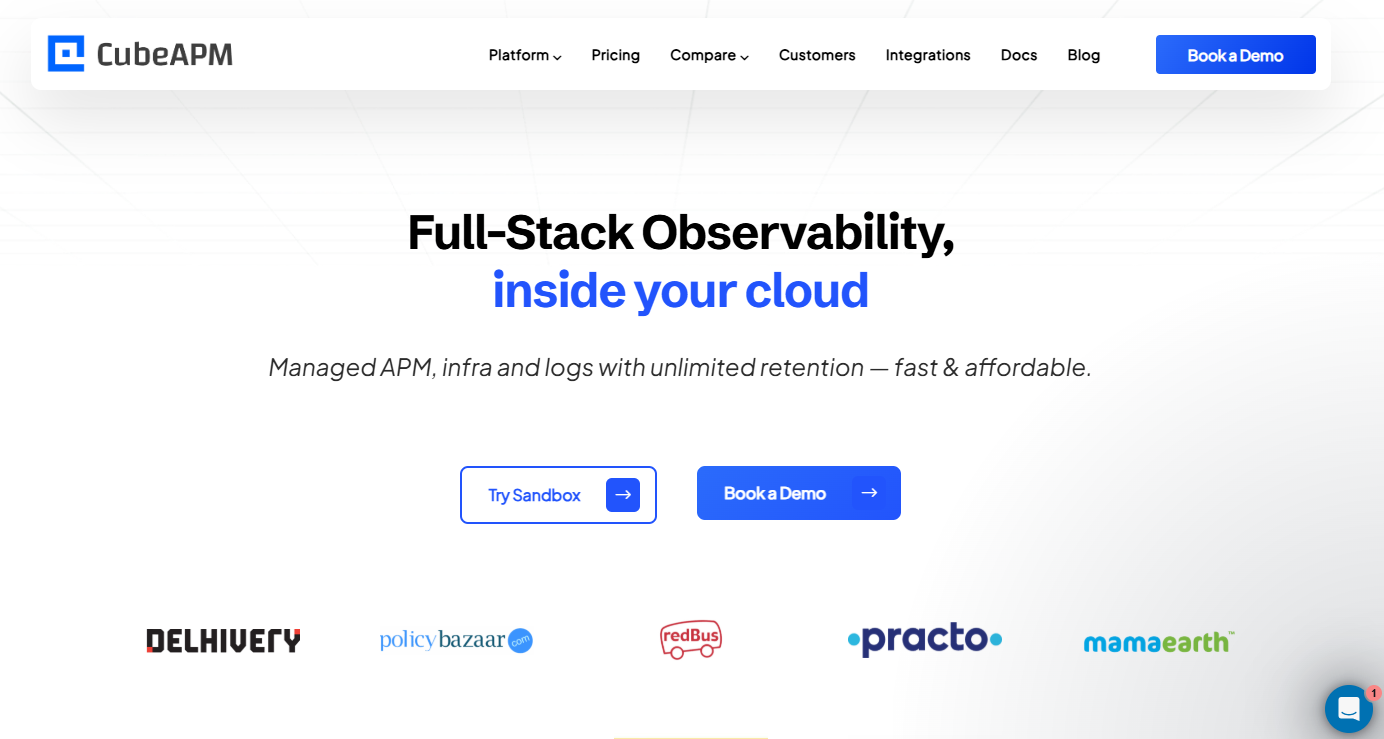
Best for: DevOps and platform teams that want full-stack observability inside their own cloud without SaaS data egress, pricing sprawl, or DIY self-hosting overhea.
Overview
CubeAPM is a self-hosted, OpenTelemetry-native, full-stack observability platform that runs inside your own AWS, GCP, or Azure VPC. Traces, logs, and metrics never leave your infrastructure boundary - which means zero cloud egress cost and full data sovereignty by architecture, not by policy. CubeAPM handles upgrades, patches, and platform operations; you provide the infrastructure.
Kubernetes and Cloud-Native Fit
CubeAPM ingests Kubernetes telemetry natively via OpenTelemetry, giving teams pod-level traces, container metrics, and node health in a single platform. Because it runs in-VPC, the telemetry generated by ephemeral pods and auto-scaling node pools stays inside your infrastructure - no egress fees scaling with cluster size. At 30TB/month, that saves ~$3,000/month in cloud data-out charges alone compared to any external SaaS platform.
Ranked in the top 10 APM platforms in G2's Spring 2026 APM Grid Report. Capterra 5/5, G2 5/5, and #4 easiest-to-use APM tools on G2. Used by Policybazaar (insurance), Delhivery ($3.5B logistics - 75% savings after replacing three separate monitoring tools), Mamaearth ($1.2B), world's largest bus aggregator - redBus (part of MakeMyTrip Limited (NASDAQ: MMYT), 8+ countries), Ola, and Practo (healthcare). SOC 2 Type II and ISO 27001 certified.
Key Features
Full MELT observability: Metrics, events, logs, and traces in one platform with a single investigation workflow
OpenTelemetry-native: Compatible with OpenTelemetry, Datadog, New Relic, Elastic, and Prometheus agents for incremental migration
Self-hosted, vendor-managed: Deploys in your VPC. Your monitoring stays up even if the internet doesn't
AI-based Smart Sampling: Reduces low-value telemetry volume while preserving high-value traces - critical for K8s environments generating high trace volumes from sidecar proxies
Unlimited retention: Included in pricing - no separate retention charges
MCP server: CubeAPM provides an MCP server that customers can use to query CubeAPM in natural language
800+ integrations: Kubernetes, synthetic monitoring, RUM, and error tracking included
Pricing
Ingestion-based pricing of $0.15/GB. No per-user fees. No per-host charges. Unlimited users and unlimited data retention included. Single billing dimension - no surprises from metrics, hosts, or users.
At 30TB/month: ~$5,100/month all-in ($4,500 license + ~$600 infra)
Delhivery: 75% savings after replacing three separate monitoring tools. Mamaearth: ~70% savings, migrated in under an hour. redBus: 4x faster dashboards, 50% faster MTTR.
"Dashboards are astonishingly fast compared to New Relic - the migration process was also super smooth."
Direct engineering support via WhatsApp and Slack channels - responds in minutes during incidents.
Pros
70-75% lower cost than enterprise APM at scale
Complete data ownership; telemetry never leaves your VPC
Predictable pricing with no hidden billing dimensions
Zero cloud egress cost; critical for K8s clusters generating high telemetry volume
Fast migration - multiple customers report under an hour setup
Cons
Requires self-hosted deployment in cloud or on-prem; may not suit teams looking for a SaaS-only model
AI/ML anomaly detection is growing but not as mature as Dynatrace Davis AI.
SSO/RBAC less mature than enterprise SaaS incumbents
2. Datadog
More posts from our blogKeep reading

.png)
.png)