

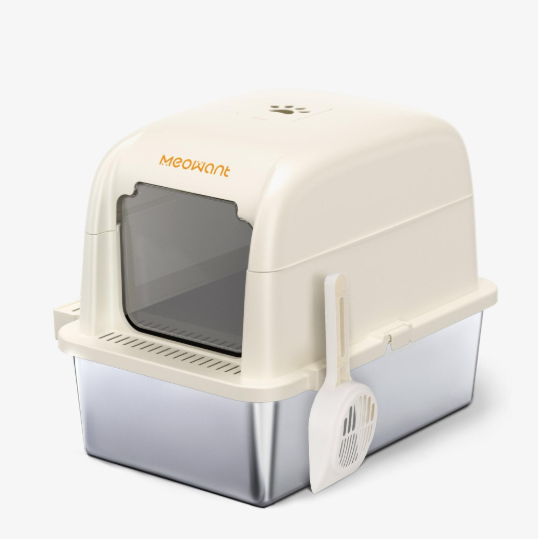
There is a specific kind of frustration that comes from cleaning a litter box thoroughly, refilling it with fresh litter, and still catching a whiff of ammonia an hour later. You scoop daily. You wash the pan. And the smell comes back anyway, sometimes faster each time. At that point, the problem is not your cleaning routine. It is the box itself.
Plastic litter boxes are porous at a microscopic level. Every scoop leaves fine scratches, and those scratches become reservoirs for bacteria that produce odor. No amount of scrubbing reaches inside them. A stainless steel cat litter box solves this at the source: its surface is too hard to scratch, so there is nowhere for odor to hide.
This article explains why persistent litter box odor develops, what steel changes about the daily routine, and how to build a hygiene system that keeps the box neutral for years.
Why Litter Box Odor Comes Back
The obvious cause is waste, and scooping handles most of that. The persistent cause is the surface. When a scoop drags across a plastic pan, it cuts shallow grooves that collect clay dust, urine residue, and bacteria. Those grooves are too small to see but large enough to hold odor, and they multiply with every scoop.
Ammonia is the clearest signal. It forms when bacteria break down urine, and a scratched pan gives that bacteria a permanent home. You can wash the visible surface and still smell ammonia because the colony is living in the plastic, not on it. This is why some boxes seem to smell worse after cleaning: the scrubbing removes the top layer of residue and exposes the grooves underneath.
Litter depth and litter age make the problem worse. A thin layer of litter lets waste reach the pan directly, and old litter that has stopped absorbing holds moisture against the surface. Together with a scratched pan, that combination turns a box into a persistent odor source even when it looks clean.
Plastic also absorbs odor over time. Even a well-maintained box develops a stale smell after a year or two, and that smell is a signal to your cat as much as to you. Cats have far more sensitive noses, and an odor-saturated box is a common reason they start eliminating beside it.
Covered boxes make the problem worse. A lid traps humidity and concentrates ammonia, and the enclosed space holds odor against the walls. Owners often add a lid to solve a smell problem and find it intensifies, because the box cannot air out between visits.
Signs Your Box Has Absorbed Odor
If the box still smells shortly after a full wash, if the plastic has darkened or yellowed, or if your cat has begun avoiding the box, the material has likely reached the end of its useful life. Scratching the surface with a fingernail can reveal grooves that hold residue even when the pan looks clean.
How Steel Breaks the Cycle
Stainless steel is hard enough that a litter scoop glides over it without cutting in. That single property removes the reservoirs where bacteria collect. There are no grooves to fill, no porous layer to saturate, and no place for ammonia to linger after a rinse.
The result is a box that rinses clean rather than being scrubbed clean. A quick wash with warm water and mild soap is usually enough, and the box dries without holding a smell. Owners who switch often describe the change as the first time the box has felt genuinely clean rather than merely cleaned.
The effect compounds over time. Because the pan does not degrade, the box performs the same in year three as it did in week one. There is no slow decline to work around, no need to scrub harder each month, and no point at which the box quietly stops being hygienic.
Steel also resists staining, so the pan does not yellow or darken over time. It keeps its appearance and, more importantly, its performance, which means the odor problem does not slowly return as the box ages.
Keeping Clumps From Breaking Down
Odor is also a function of how well litter clumps. A scratched plastic pan causes clumps to stick and break apart during scooping, leaving fragments behind that decompose and smell. A smooth steel surface lets clumps release intact, so less residue stays in the box between cleanings. That small difference compounds over weeks.
Building a Hygiene Routine That Holds
A steel box makes maintenance easier, but a routine is what keeps it that way. The goal is to remove waste before bacteria have time to act, and to reset the box fully on a regular schedule.
Daily scooping is the foundation. Remove solid waste and urine clumps every day, and stir the litter lightly to distribute it evenly. Once a week, empty the box completely, wash it with warm water and a mild soap, and let it dry before adding fresh litter. Every few weeks, do a deeper reset: wash the box, wipe down the surrounding floor, and replace the litter entirely rather than topping it off.
Ventilation matters too. Place the box in a spot with some airflow, away from food and water, and avoid sealing it inside a cabinet where humidity builds. A covered box can trap odor and humidity, which accelerates bacterial growth even on a steel pan.
If your home has more than one cat, add a second box rather than relying on a single large one. The general guidance is one box per cat plus one extra, and that rule reduces both traffic and odor because each box sees less use between cleanings. Steel makes multiple boxes affordable to maintain, since they do not need replacing.
Meowant's high-sided steel design keeps litter contained while leaving the interior easy to wash, which makes the weekly reset a five-minute task instead of a chore. That accessibility is what keeps a routine from slipping.
What to Avoid
Avoid abrasive pads and strong chlorine cleaners, which can dull the finish and leave residue that affects the box. Scented litter and deodorizing sprays often mask odor rather than remove it, and many cats dislike the added fragrance. Clean the source instead of covering it up.
Keep an eye on the litter itself as well. Litter that has been in the box too long loses its ability to absorb and neutralize, even if it looks dry. A full replacement every few weeks keeps the box working properly and prevents the slow buildup of odor that topping off can hide.
Choosing a Box With Longevity in Mind
When shopping for a steel box, focus on the details that affect daily use. A high-sided pan with a low entry point contains scatter without making access difficult. Rounded interior corners let a scoop reach every part of the pan. A stable base prevents sliding when a cat digs enthusiastically.
Size matters for comfort as well. Cats need room to turn around, so choose a pan long enough for your cat to stand and pivot. Multi-cat homes benefit from more than one box regardless of material, since a single box becomes a bottleneck and a source of stress.
Litter depth is another factor in odor control. Too little litter leaves the bottom exposed and allows waste to contact the pan directly; too much wastes litter and makes scooping harder. A consistent depth of a few inches gives cats enough to dig while keeping the surface easy to maintain.
Look at the room as a whole, too. Odor that seems to come from the box can actually be trapped in the floor, a nearby rug, or the walls behind it. Wiping down the surrounding area when you do a full reset removes residue the box itself never touched.
A Cleaner Box Starts With the Right Surface
If you have scrubbed, scooped, and still smell ammonia, the box is working against you. Plastic holds odor in scratches that cleaning cannot reach, and no routine will fully overcome that. Stainless steel removes the problem at its root by giving bacteria nowhere to settle.
Pair a steel box with daily scooping, a weekly wash, and good ventilation, and the litter box stops being the room you avoid. It is one of the few changes in pet care that improves both your home and your cat's willingness to use the box, and it keeps delivering that benefit long after a plastic pan would have been replaced.

.png)