

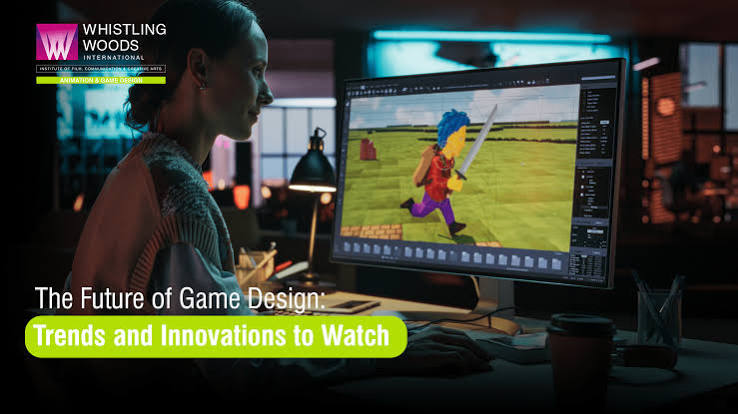
The way games are designed has changed dramatically over the years. Early digital games were often built around simple mechanics, limited graphics, and straightforward objectives. Modern games, by comparison, can contain detailed worlds, complex systems, dynamic characters, online features, and constantly changing content. This evolution has changed not only how games look, but also how players interact with them.
ormas188.com can be connected to this wider development of digital gaming, where technology and creative design work together to create different types of player experiences. Understanding modern game design helps explain why certain games remain popular while others struggle to keep players interested.
Good Games Start With Simple Ideas
Despite the complexity of modern technology, many successful games begin with a relatively simple concept.
A game might be built around exploration, competition, problem-solving, strategy, storytelling, or cooperation. Developers then build additional systems around that central idea.
This is important because complexity does not automatically make a game better. If players cannot understand what they are supposed to do, impressive graphics and advanced technology cannot compensate for confusing gameplay.
The strongest designs usually make the basic objective easy to understand while giving players enough depth to remain interested.
Gameplay Comes Before Graphics
Graphics are one of the first things people notice about a game, but visual quality is only one part of the experience.
A game can have beautiful environments and detailed characters but still become boring if the underlying gameplay is repetitive.
Developers therefore spend considerable time thinking about controls, progression, challenges, rewards, difficulty, and player feedback.
For a platform such as ORMAS188, discussing these aspects can provide more meaningful gaming content than simply focusing on screenshots or promotional claims.
The Importance of Player Choice
Modern games increasingly give players opportunities to make decisions.
Choices might influence the direction of a story, the development of a character, the order in which missions are completed, or the strategy used to overcome a challenge.
Player choice can make an experience feel more personal because different people may approach the same game in completely different ways.
This is particularly noticeable in role-playing and strategy games, where decisions can have consequences later in the experience.
Difficulty Needs Balance
Difficulty is one of the most complicated aspects of game design.
If a game is too easy, players may lose interest quickly. If it is too difficult, beginners may become frustrated and stop playing.
Good developers therefore try to create a gradual learning curve. Early challenges introduce the basic mechanics, while later challenges require players to apply what they have learned.
Modern games can also provide different difficulty settings, allowing players with different experience levels to find an appropriate challenge.
Rewards and Progression
Progression systems give players a reason to continue exploring a game.
Characters may gain new abilities, players may unlock additional areas, or new challenges may become available over time.
These systems can create a sense of achievement because players can see evidence of their progress.
However, progression should feel meaningful. If rewards are repetitive or require excessive grinding, players may feel that the game is wasting their time.
Storytelling Has Become More Important
Games have increasingly adopted storytelling techniques from films, books, and television.
Modern titles can feature complex characters, dialogue systems, cinematic sequences, and branching narratives.
Unlike passive forms of entertainment, games allow players to interact with the story. Their actions can sometimes influence what happens next.
This combination of storytelling and interaction has helped establish games as a major creative medium.
Sound Creates Atmosphere
Sound is another element that is sometimes overlooked.
Music can establish tension, excitement, mystery, or calmness. Sound effects provide feedback and help players understand what is happening around them.
Environmental audio can make a digital world feel more believable.
Good sound design does not necessarily need to be loud or dramatic. Sometimes subtle sounds can have a greater effect because they support the environment without distracting from gameplay.
Multiplayer Changes the Experience
Online multiplayer has introduced another major dimension to game design.
Players can compete against or cooperate with people from around the world. This creates unpredictable experiences because human opponents behave differently from computer-controlled characters.
Developers must therefore design systems that encourage fair competition and cooperation.
Matchmaking, communication tools, ranking systems, moderation, and reporting features have become important parts of multiplayer game design.
Accessibility Is Becoming More Important
Game developers are increasingly thinking about accessibility.
Options such as adjustable text size, subtitles, customizable controls, color settings, difficulty adjustments, and audio controls can make games easier for a wider range of people to enjoy.
Accessibility benefits the gaming industry because it allows more players to participate.
A well-designed game should provide flexibility without unnecessarily limiting the experience to one type of player.
The Influence of Mobile Technology
Mobile devices have introduced new ideas into game design.
Touchscreens allow developers to create different control systems, while shorter gaming sessions encourage games that can be enjoyed in smaller periods of free time.
Mobile games have also influenced the broader industry by demonstrating how important convenience and accessibility can be.
The continued improvement of smartphones means developers can now create increasingly sophisticated mobile experiences.
Artificial Intelligence in Game Development
Artificial intelligence is becoming another important technology in game development.
AI can assist developers with areas such as character behavior, testing, animation, procedural content, and game balancing.
Non-player characters can become more responsive, while automated systems can help developers identify technical problems.
AI does not replace creative game design, but it can provide developers with additional tools for building and testing complex experiences.
Cloud Gaming and the Future
Cloud gaming could also change how games are delivered.
Instead of relying entirely on local hardware, cloud systems can process some of the demanding work remotely and stream the result to a compatible device.
This could make sophisticated games accessible through hardware that would traditionally have struggled to run them.
However, reliable internet connections, latency, infrastructure, and subscription costs remain important considerations.
What Makes a Game Memorable?
A memorable game is usually more than a collection of technical features.
Players remember how a game made them feel, the challenges they overcame, the characters they encountered, and the moments they shared with friends.