
Most modern license exams for amateur radio no longer require Morse code proficiency, yet a surprising number of operators keep learning and using it anyway. Why would anyone choose a century-old signaling method when voice and digital modes are readily available? The answer comes down to efficiency, reliability, and, for many operators, genuine enjoyment of a skill that connects directly to the roots of radio communication itself.
CW: The Language Behind the Hobby
In HAM radio circles, Morse code transmission is known as CW, short for “continuous wave.” Unlike voice communication, CW requires very little bandwidth and can often punch through weak or noisy signal conditions where a voice transmission would be unintelligible. This makes it especially valuable for long-distance (“DX”) contacts, low-power (“QRP”) setups, and emergency communications when conditions are far from ideal.
The technical reason CW performs so well under poor conditions comes down to what the receiver actually has to detect. A voice signal requires the receiver to reconstruct a complex, continuously varying waveform accurately enough to be understood. A CW signal only requires the receiver to detect whether a tone is present or absent at any given moment, a much simpler task that remains reliable even when signal strength is low or interference is high. This is why operators trying to make contact across thousands of miles with minimal transmitting power often turn to CW rather than voice.
Why Operators Still Choose to Learn It
Beyond pure technical advantage, there’s a cultural element. Many operators describe CW as a more personal, rhythmic form of communication every operator has a slightly different “hand” or “fist,” a subtle variation in timing and style that experienced listeners can recognize almost like a signature. It’s less about necessity and more about mastering a skill that connects directly to the origins of radio communication, back when every single transmission depended entirely on an operator’s ability to send and receive Morse accurately.
There’s also a competitive and achievement-oriented side to CW within the hobby. Contests specifically for CW operation, awards for confirmed contacts using Morse, and a general sense of prestige attached to CW proficiency all encourage operators to keep the skill alive, even when it’s no longer required by any licensing body.
Training and Practice Methods
Since exams rarely require it anymore, most new CW operators build proficiency independently. A common approach involves starting with just two letters, adding new ones gradually, and prioritizing audio recognition over reading a printed chart. Consistent short practice sessions ten to fifteen minutes a day tend to produce faster results than long, infrequent study blocks, largely because ear-training benefits from spaced repetition rather than cramming.
Many experienced operators also recommend practicing with real, standardized call signs and common radio phrases rather than random letter combinations, since this builds recognition patterns that transfer directly to actual on-air use. Listening to real CW nets and contests, even before you can decode everything being said, is another common recommendation for building familiarity with natural transmission speed and rhythm.
Digital tools have made this process considerably easier. Instead of tapping out patterns manually, an operator can use https://encodemorse.com/ to type a phrase and instantly hear it played back at an adjustable words-per-minute speed, gradually increasing difficulty as recognition improves. This kind of consistent, adjustable-speed audio practice mirrors traditional CW training methods used for decades, just without needing a dedicated code practice oscillator or another operator to send for you.
From Practice to Real On-Air Use
Learning to recognize Morse code in a quiet practice environment is only the first step. Real on-air CW involves additional challenges: fading signals, other stations transmitting nearby on close frequencies, atmospheric noise, and varying sending speeds from different operators. Many newer CW operators describe a noticeable gap between their practice-room comprehension and their first real on-air contacts, which is why gradually introducing noisier, less controlled practice conditions once the basics feel solid is a common next step recommended by experienced operators.
A Morse Code Generator with adjustable speed settings is particularly useful during this transition phase, since it allows an operator to practice at progressively faster speeds that better match real-world on-air conditions, rather than staying indefinitely at a comfortable beginner pace.
A Skill With Staying Power
Even as digital modes like FT8 dominate much of modern amateur radio, CW operation remains one of the most respected and enduring skills in the hobby. For operators willing to put in the practice, it opens up contacts and contest categories that voice-only operators simply can’t access, along with a genuine sense of connection to the earliest decades of radio communication proof that a 19th-century signaling system still has a firm, actively practiced place in 21st-century radio.
CW Contests and Awards Within the Hobby
One of the reasons CW remains so actively practiced, rather than fading into pure nostalgia, is the structured competitive culture built around it. Contests specifically dedicated to CW operation reward operators for the number and distance of confirmed contacts made using Morse within a set time window, giving newer operators a clear, motivating goal to work toward as their speed and accuracy improve. Beyond contests, various operating awards recognize milestones like confirmed contact with a set number of countries or specific geographic regions using CW exclusively, giving the skill a long-term sense of progression that keeps experienced operators engaged for years.
The Physical and Mental Skill of Sending, Not Just Receiving
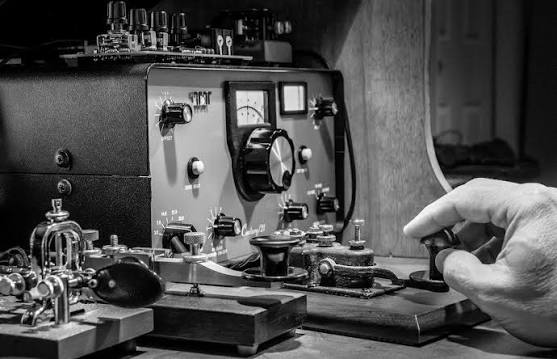
Most discussions of learning CW focus heavily on recognizing incoming Morse by ear. But sending is its own distinct skill, traditionally developed using a manual telegraph key or, more commonly today, an electronic keyer that helps maintain consistent timing. Good “fist” the recognizable personal rhythm and consistency of an operator’s sending takes real practice to develop, and experienced operators can often distinguish one another’s sending style almost like recognizing a familiar voice, even without seeing a call sign.
How New Operators Typically Progress
Most newcomers to CW follow a fairly predictable arc: several weeks of focused ear-training using slow, clean practice audio, followed by a period of listening to real on-air CW nets without necessarily trying to copy every word, followed eventually by attempting short, simple real contacts at a comfortable speed. Speed generally increases gradually over months rather than weeks, and many experienced operators note that comfortable real-world CW conversation typically requires considerably more practice than the initial alphabet-recognition stage alone.
Final Thoughts
CW isn’t kept alive by regulation or necessity anymore it survives because operators genuinely find value in it, whether that’s technical reliability under poor conditions, a sense of tradition, competitive achievement, or simply the personal satisfaction of mastering a skill that connects directly to the earliest days of wireless communication. For anyone drawn to amateur radio, CW remains one of the most rewarding paths within the hobby, and one that modern practice tools have made more approachable than ever before.
.png)