

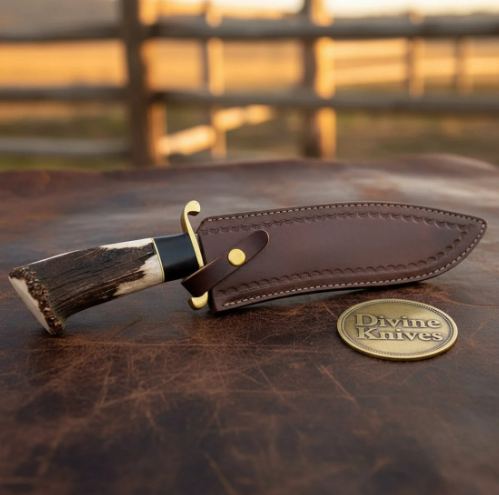
A Bowie knife and a leather sheath belong together. The big clip-point blade is pure American heritage, and a well-made leather sheath is what lets you carry, protect, and display it properly. Many buyers focus only on the blade and treat the sheath as an afterthought, but on a premium Bowie the two are one package. If you are comparing styles, a dedicated range of classic Bowie knives is a good place to see how blade shape, handle material, and sheath work come together.
A premium Bowie is more than a large blade. Steel quality, tang strength, handle fit, and the leather that protects it all decide whether you own a dependable tool or just a decoration. This guide explains what to look for so you can buy with confidence.
Bowies suit hunters, campers, and collectors alike. They handle game processing, camp chores, and general field work, while carrying real historical appeal. A piece like this stag antler classic Bowie knife with leather sheath shows how a traditional blade, natural antler handle, and fitted leather sheath can be sold as a complete set. The sections below cover what is worth checking before you pay.
What Defines a Premium Bowie Knife?
Classic Bowie Design Features
Most Bowie knives share a recognizable profile:
A large, broad blade, often 6 to 12 inches, with hunting versions typically shorter.
A clip point, where the spine is cut away near the tip for a fine, controllable point.
A pronounced belly for slicing and skinning.
A crossguard that protects the hand.
A substantial handle that balances the blade's weight.
Quality Over Size
A longer blade does not make a better knife. Premium quality shows in grind consistency, balance, fit, and finish. A well-made 8-inch Bowie will outperform a poorly made 12-inch one every time.
Bowie vs. Standard Hunting Knife
A standard hunting knife is smaller and focused on field dressing. A Bowie handles heavier tasks such as kindling, rope, and camp work as well. The tradeoff is size and weight, so choose a length you will actually carry.
Why the Leather Sheath Matters So Much
Protection for Blade and User
A sheath keeps the edge protected, prevents accidental cuts, and keeps the knife secure during travel. A poor sheath can dull the edge or let the knife slip out.
Part of the Knife's Value
A premium sheath adds real value. Collectors often judge a Bowie by its sheath as much as its handle, because stitching and leather quality reveal the maker's attention to detail.
Carry Comfort
A good sheath carries the knife at a comfortable angle and keeps its weight steady on your belt. This matters more with a large Bowie than with a small hunting knife.
What to Look for in a Quality Leather Sheath
Leather Type and Thickness
Look for thick, full-grain or vegetable-tanned leather. It is more durable and holds its shape better than thin, bonded, or cheaply split leather. The sheath should feel stiff and solid, not floppy.
Stitching and Construction
Stitching should be even, tight, and double-rowed in stress areas. Loose threads, uneven spacing, or glue-only seams are warning signs. Rivets at stress points add strength.
Fit and Retention
The knife should slide in smoothly and sit snugly without rattling. A retention strap or snap closure keeps it secure when you are walking, climbing, or riding.
Welt and Edge Protection
A welt, which is an extra strip of leather sewn along the seam, protects the stitching from the blade's edge. Quality sheaths include one, which helps prevent the knife from cutting through the stitching over time.
Belt Loop Design
Check that the belt loop is sturdy and wide enough for your belt. Some sheaths offer angled or dangler carry options for added comfort.
Best Handle Materials for Premium Bowie Knives
Stag Antler
Stag is the classic choice. Its natural texture gives a secure grip, and every handle is unique. It pairs beautifully with leather sheaths and a polished clip point blade.
Wood Handles
Hardwoods such as rosewood, walnut, and wenge give warmth and a refined look. Proper finishing protects them from moisture.
Bone and Horn
These offer traditional beauty and individual patterns. Check for cracks or voids before buying.
Synthetic Handles
Micarta and G10 are tough, weather resistant, and grippy. They suit hard use, though they have less traditional character.
Choosing the Right Blade Steel
Stainless Steel
Stainless steels such as 440C, VG-10, S30V, and J2 resist corrosion and need less maintenance. They suit wet conditions and polished finishes.
High-Carbon Steel
Steels like 1095, 5160, and O1 are tough and sharpen easily, but they need oiling to prevent rust. Over time they develop a patina that traditionalists enjoy.
Damascus Steel
Damascus gives dramatic layered patterns that look excellent with stag or wood handles. Quality varies, so buy from reputable sellers.
Why Heat Treatment Matters
Even great steel performs poorly if it is badly heat treated. Ask the seller how the blade was treated and what hardness it targets.
Construction Details That Separate Premium from Ordinary
Full Tang Strength
A full tang, where the steel runs through the entire handle, gives the best strength for a large knife. Verify this where possible, and ask the seller to confirm.
Guard and Pommel Fit
The guard should be tight against the blade with no gaps. The pommel should add balance, not just weight.
Balance in the Hand
A big knife should still feel controllable. Pick it up and check where the weight sits. Good balance reduces fatigue and improves accuracy.
How to Inspect a Bowie Knife and Sheath Before Buying
Quality Checklist
Blade alignment: centered and straight in the handle.
Grind lines: clean and symmetrical from heel to tip.
Handle fit: no gaps between handle, guard, and pommel.
Edge: evenly ground and sharp.
Sheath stitching: tight, even, and well finished.
Sheath fit: snug, secure, and easy to draw.
Red Flags to Avoid
Watch for vague steel claims, rattling handles, thin or flimsy leather, glued seams, and prices that seem too good to be true. If buying online, check photos carefully and read the full product description.
How to Care for a Bowie Knife and Leather Sheath
Blade Care
Wipe the blade dry after use. Oil carbon steel lightly. Even stainless benefits from a clean, dry blade.
Leather Care
Clean the sheath with a dry or slightly damp cloth, and condition it occasionally with a quality leather conditioner. Avoid soaking it or leaving it in direct heat.
Storage Tips
Do not store the knife sealed inside a leather sheath for long periods. Leather can hold moisture and cause rust or staining. Keep both in a dry, stable place.
Sharpening
Use a quality whetstone or sharpening system and maintain the original angle. Touch up the edge early rather than waiting until it is badly dull.
Smart Buying Tips for Premium Bowie Knives
Set a Budget
Prices vary with steel, handle material, and craftsmanship. Decide your budget first and compare within it.
Check What Is Included
Confirm whether a sheath comes with the knife and what it is made from. Complete sets often offer better value than buying a sheath separately.
Buy From Transparent Sellers
Choose sellers who clearly describe materials, dimensions, and construction, and who offer a return or warranty policy.
Know Your Local Laws
Large knives are regulated differently by state and city. Check rules on blade length, carrying, and shipping before you buy.
Final Thoughts
The best premium Bowie knives with leather sheaths pair a well-made blade with a sheath that protects and presents it properly. Look for a clean clip point, quality steel, solid construction, a handle that feels right, and thick, well-stitched leather. When the blade and sheath are both done right, you get a knife worth using and keeping. To keep comparing, explore more classic Bowie knives with leather sheaths and choose the one that fits your hand and style.
Frequently Asked Questions (FAQs)
What is the best leather for a Bowie knife sheath?
Thick, full-grain or vegetable-tanned leather is generally best. It is durable, holds its shape, and ages well.
Why does a Bowie knife need a good sheath?
A good sheath protects the edge, keeps the knife secure, and prevents accidents. On a premium knife it also adds to the overall value.
Is stag a good handle material for a Bowie knife?
Yes. Stag has a natural texture, a secure grip, and a classic look. Keep it away from prolonged moisture and extreme heat.
What steel is best for a Bowie knife?
Stainless steels like S30V and VG-10 resist rust, while high-carbon steels like 1095 and 5160 are tough and easy to sharpen. Damascus is popular for display.
How long should a Bowie knife blade be?
Hunting Bowies are usually around 5 to 8 inches for a good balance of control and power. Longer blades suit camp use and collecting.
Should I store my Bowie knife in its leather sheath?
For short-term carrying, yes. For long-term storage, keep the knife dry and out of the sheath, since leather can trap moisture and cause rust.
How do I clean a leather knife sheath?
Wipe it with a dry or slightly damp cloth, let it air dry away from heat, and apply a leather conditioner occasionally.
Are Bowie knives legal to carry?
Laws vary by state and city, especially on blade length and carry method. Check current local regulations before buying or traveling with one.