

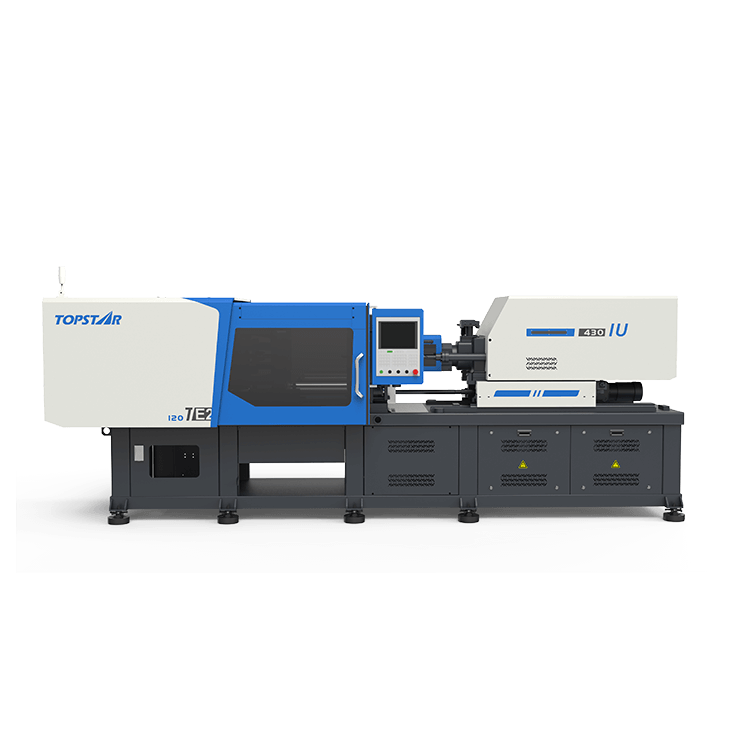
Plastic components for automotive interiors and exteriors place extremely high demands on product consistency, surface quality, and dimensional stability. As a Product Manager for Topstar’s advanced moulding equipment, I have worked with numerous manufacturers who rely heavily on injection moulding machines with consistent performance to meet these stringent standards day in, day out. Whether it be instrument panel assemblies, door trim panels, exterior trim components or headlamp housings, the performance of the injection moulding machine directly determines component quality, production efficiency and compliance with original equipment manufacturer (OEM) standards. This article will explore the application of stable injection moulding machines in the production of plastic components for automotive interior and exterior trim. Drawing on Topstar’s process data, on-site test results and real-world customer case studies, we will analyse how equipment stability delivers tangible benefits for large-scale production in the automotive industry.
Stability Requirements for Moulding Machine in Automotive Component Production
The stability requirements for automotive components are primarily reflected in precise dimensional control and repeatable surface quality. Interior trim components must fit precisely with mating parts and maintain their appearance under various temperature and humidity conditions. Exterior trim components, meanwhile, face additional challenges such as UV resistance, impact resistance and the requirement for ‘Grade A’ surface finish. A stable injection moulding machine is the cornerstone for ensuring these requirements are met during long production runs.
Fluctuations in injection speed, holding pressure or mould temperature can often rapidly lead to warping, sink marks, uneven gloss or assembly issues. Topstar minimises these sources of instability through precise servo control, a highly rigid mechanical design and seamless integration with a mould temperature controller. The resulting process platform ensures that critical dimensional tolerances remain stable throughout every cycle of continuous production.
Precision Process Control for Moulding Interior Components
Precise process control enables the injection moulding machine to meet the surface quality and dimensional accuracy requirements of automotive interior components. Whether dealing with soft-touch surfaces, textured trim panels or complex geometries with non-uniform wall thicknesses, the machine must possess precise filling and holding pressure capabilities. The servo-driven injection unit maintains multi-stage speed profiles, thereby promoting uniform melt flow and minimising visible weld lines or flow marks. This injection moulding machine supports stable holding pressure functionality, compensating for material shrinkage without generating residual stress. Combined with a high-precision mould temperature control system, the machine maintains the required thermal conditions, thereby ensuring consistent texture reproduction and reducing the risk of warpage. Topstar’s closed-loop control system continuously corrects minor deviations, keeping process parameters consistently within the specified range.
Processing large parts with complex geometries using a moulding machine with stable performance
Processing large parts with complex geometries places severe demands on the mechanical performance and process stability of injection moulding machines. Components such as exterior bumpers, side skirts and large interior trim brackets all require equipment with high clamping force, uniform platen parallelism and stable injection performance with long runners. Any structural deformation or pressure loss may result in incomplete filling, flash (burrs) or dimensional deviations.
Topstar has specifically designed the structural frame and clamping system of its injection moulding machines to ensure high rigidity under load. Through precise control of the injection and holding pressure processes, the melt is ensured to fill every corner of the mould cavity under controlled conditions. Furthermore, the integrated high-performance mould temperature control system enables uniform cooling across large areas, thereby effectively reducing uneven shrinkage and warpage.
Surface Quality and Appearance Control in Injection Moulding Machine
Surface quality and appearance control determine whether automotive exterior components and visible interior parts can meet Grade A surface or high-visibility standards. The injection moulding machine must ensure a smooth and uniform filling process to avoid defects such as flow marks, spatter marks and filling stagnation. Stable melt temperature, precise injection speed changes and uniform mould surface temperature collectively determine the appearance of the final product.
Topstar coordinates the control of injection moulding process parameters with the temperature control unit settings to maintain the temperature conditions required for high-gloss or textured surfaces. The system features real-time monitoring capabilities, enabling the rapid identification of trends that may affect appearance and maintaining process stability through adaptive adjustments. This significantly improves the first-pass yield rate for appearance-critical components. Following the adoption of Topstar injection moulding technology, a supplier of lighting and exterior trim components saw a substantial reduction in surface defect rates. Components that previously required secondary polishing or special assessment for release now pass inspection immediately upon demoulding.
Material Compatibility and Process Robustness
The moulding machine’s exceptional material compatibility and process robustness enable it to process a wide range of resin materials commonly used in automotive interior and exterior trim applications. From standard PP and ABS to engineering composites, glass-fibre-reinforced materials, and specialised exterior-grade materials, each resin has distinct requirements for flow properties, shrinkage, and thermal performance. A machine with stable performance maintains consistent production output when processing these different materials without frequent parameter adjustments.
The Topstar injection moulding machine platform offers the injection speed range, pressure capacity, and consistent plastification required for processing all types of automotive resins. When paired with a suitable mould temperature controller, this equipment can handle both general-purpose and engineering materials whilst ensuring a high degree of consistency in product quality across batches. Its process robustness significantly reduces downtime and scrap rates caused by material changes or batch-to-batch variations.
Outstanding Performance in Automotive Manufacturing
Topstar’s moulding machine solutions excel in the production of automotive interior and exterior components, thanks to their exceptional mechanical stability, precise process control, effective thermal management via integrated mould temperature controllers, and robust data processing capabilities. Each technical feature has been meticulously designed to meet the automotive industr