

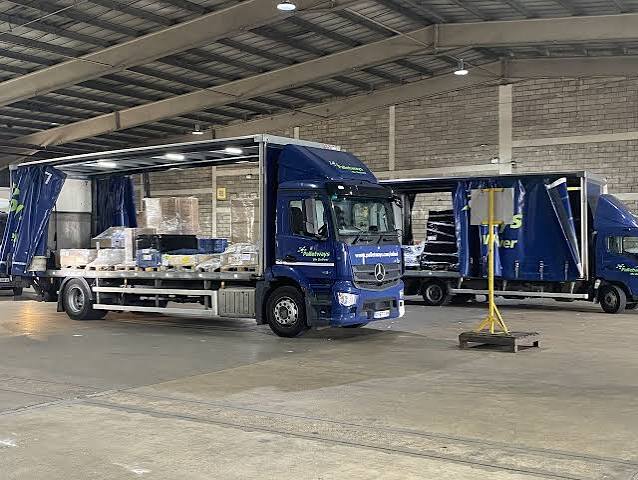
Most warehouse and distribution managers do not set out to mismanage pallet returns. The problem builds gradually — an extra stack here, a delayed pickup there — until the backlog becomes a physical and financial obstacle that disrupts daily operations. By the time the issue becomes visible, the cost has already accumulated in labor hours, lost floor space, damaged goods, and compliance exposure.
Pallet management is rarely treated as a strategic priority until something goes wrong. Yet for businesses that move product regularly — whether in food distribution, retail supply chains, manufacturing, or third-party logistics — the condition of your pallet cycle directly affects how reliably your outbound freight moves. This article addresses the operational patterns that indicate a business is absorbing unnecessary costs because it has not established a consistent, structured approach to commercial pallet removal and return.
What Commercial Pallet Pickup Actually Means for an Operation
A commercial pallet pickup service is not simply a truck arriving to collect surplus pallets. It is a scheduled, coordinated process by which a business transfers custody of used, excess, or damaged pallets to a specialized provider who then sorts, repairs, redistributes, or recycles them through appropriate channels. The distinction matters because businesses that treat pallet removal as an afterthought — relying on whoever happens to have space in a trailer — rarely see the full operational benefit that a structured service provides.
When managed properly, pallet pickup integrates with your inbound and outbound freight schedule, reduces the time your team spends moving and stacking unused pallets, and keeps your dock area functional. When it is not managed, the consequences spread outward into receiving efficiency, inventory accuracy, and even worker safety.
The Difference Between Reactive and Scheduled Removal
Reactive pallet removal happens when the problem becomes too large to ignore — when pallets block a dock door, when a safety inspection is approaching, or when a customer complaint forces the issue. Scheduled removal, by contrast, operates on a cadence that matches the volume your facility generates. The difference is not cosmetic. Reactive removal creates labor spikes, disrupts normal workflows, and often results in damaged pallets being mixed with recoverable ones because there is no time to sort properly. Scheduled removal allows for consistent sorting, documentation, and cost recovery that reactive approaches cannot support.
Sign 1: Your Dock Area Is Consistently Congested
Dock congestion caused by pallet accumulation is one of the clearest indicators that your current approach to pallet management is not keeping pace with your operation's volume. When incoming freight cannot be unloaded efficiently because there is no clear space to stage product, every subsequent step in your receiving process slows down.
How Congestion Creates Compounding Delays
A congested dock does not just slow receiving. It affects outbound shipment staging, reduces the number of carriers you can service simultaneously, and increases the likelihood of product damage when workers are forced to maneuver in tight conditions. Over time, carriers begin to notice if your dock consistently causes delays, and this can affect your standing with logistics partners who have schedules to maintain.
Sign 2: Your Staff Spends Significant Time Moving Pallets
When warehouse associates or dock workers regularly spend time relocating stacked pallets to create working space, that labor is being drawn away from its primary purpose. Moving pallets is not a value-added activity. It does not advance an order, improve accuracy, or serve a customer. It is displacement work — time spent correcting an inventory management gap that a scheduled removal service would eliminate.
Measuring the Real Cost of Displacement Labor
The cost of displacement labor is difficult to see on a single shift, but it accumulates reliably over weeks and months. When you calculate the average hourly cost of your warehouse staff and multiply it by the time spent weekly on pallet movement that a pickup service would handle, the figure is often surprising. More importantly, that time represents attention and physical capacity that could be directed toward order fulfillment, receiving accuracy, or equipment maintenance.
Sign 3: Damaged Pallets Are Mixing With Usable Stock
In operations without a disciplined pallet removal process, damaged pallets tend to migrate into general storage alongside usable ones. This happens because there is no clear protocol for separation, and workers under time pressure take the path of least resistance. The result is that usable pallets become harder to identify quickly, and damaged ones occasionally make it back into the shipping cycle — which creates risk at the point of loading and potential liability if a pallet fails during transit.
Sign 4: You Have No Record of Pallet Volume or Movement
Businesses that lack visibility into how many pallets they receive, hold, and return each week are operating blind on a line item that has real financial implications. Pallet programs — whether rental, pooled, or owned — often carry terms that require accurate tracking. Without records, businesses cannot verify whether they are being billed correctly for rental pallets, cannot identify where losses are occurring, and cannot forecast removal needs accurately.
Why Tracking Is an Operational Discipline, Not an Administrative Task
Pallet tracking is often assigned to administrative staff as a secondary duty, which means it is the first thing to fall behind when volume increases. A structured pickup service typically includes documentation of what is removed, which creates a baseline record that an internal team can build on. According to general supply chain accounting principles recognized by bodies such as the U.S. Bureau of Labor Statistics, untracked materials movement contributes to inventory discrepancies that inflate operational costs over time.
Sign 5: You Are Paying for Space That Pallets Are Occupying
Warehouse space has a measurable cost per square foot, whether you own or lease the facility. When pallets — particularly empty or damaged ones — occupy floor space for extended periods, that space cannot be used for revenue-generating inventory. This is a straightforward displacement of value. Businesses operating near capacity feel this most acutely, but even operations with room to spare are developing habits that will create problems as volume grows.
Sign 6: Safety Incidents or Near-Misses Involve Pallets
Stacked pallets stored improperly, placed in high-traffic areas, or left near dock edges represent a documented category of workplace hazard. If your incident logs or near-miss reports include pallet-related events, this is a direct signal that your current approach to pallet management is creating exposure. Workplace safety obligations are not optional, and the cost of a single serious incident — in workers' compensation, productivity loss, and regulatory consequence — far exceeds the cost of a structured removal service.
The Relationship Between Housekeeping and Safety Culture
Operations that maintain orderly dock and warehouse environments generally experience fewer safety incidents. This is not incidental. When workers can see clear pathways, locate equipment easily, and move product without working around obstacles, the probability of error decreases. Pallet accumulation disrupts this order in ways that are easy to normalize over time, which is precisely why the risk often goes unaddressed until something happens.
Sign 7: Your Pallet Returns to Vendors or Pools Are Inconsistent
If your business participates in a pallet rental program or a pooled pallet system, inconsistent returns create financial and contractual exposure. Rental programs charge for pallets that are not returned within specified windows, and those charges accumulate without generating any operational benefit. Inconsistent returns often trace back to a lack of coordination between your outbound freight schedule and your pallet removal process — a gap that a commercial pallet pickup arrangement is specifically designed to close.
Sign 8: Your Operation Scales Seasonally but Your Pallet Process Does Not
Businesses in retail supply chains, agricultural distribution, and consumer goods often experience significant volume swings tied to seasonal demand. Pallet accumulation accelerates during these periods, and an approach to removal that works during steady-state operations can fail quickly when volume increases by thirty or fifty percent. If your team scrambles to manage pallet buildup during peak periods, it is an indication that your baseline process does not have the flexibility to absorb variability.
Sign 9: Carrier Relationships Are Being Affected
Carriers and drivers notice dock conditions. When a facility consistently has disorganized dock areas, extended loading times, or insufficient space for staging, drivers communicate this within their networks. In a tight freight market, facilities with reputations for inefficient docks can find it harder to secure preferred carrier relationships or consistent capacity. Pallet management is one of the contributing factors to dock efficiency, and its absence shows in ways that affect more than just internal operations.
Sign 10: No One in Your Organization Owns the Pallet Process
In many businesses, pallet management exists in a gap between departments. Receiving assumes outbound handles it. Operations assumes the carrier takes pallets away. No one has been formally assigned responsibility for pallet tracking, removal scheduling, or vendor coordination. When responsibility is diffuse, accountability disappears and costs accumulate silently. Establishing a relationship with a dedicated commercial pallet pickup provider often forces the organizational clarity that identifies who owns this process and what it requires.
Conclusion: Pallet Management Is an Operational Decision, Not a Housekeeping Issue
The ten patterns described in this article are not isolated problems. They are symptoms of a systemic gap in how a business manages a physical asset that touches every part of its freight and warehouse operation. Pallets move through a facility constantly, and the absence of a structured process for their removal creates compounding inefficiency — in labor, space, safety, and vendor relationships — that is often invisible until it reaches a critical threshold.
The businesses that manage this well have not discovered a complicated solution. They have simply recognized that pallet removal requires the same deliberate scheduling and accountability that governs every other logistics function. A consistent commercial pallet pickup arrangement reduces the number of decisions your team has to make about a low-value task and returns their attention to work that actually moves the business forward.
If more than a few of these signs are present in your current operation, the cost of inaction is already visible — in your labor hours, your floor plan, and your freight relationships. The decision to address it is less about expense and more about recognizing where preventable friction has been allowed to settle into routine.